Neutral Individual High Deity of Space
Primordial Deity of Emptiness and Nothing; Colossus of the Void; Guardian of Absence and Keeper of the End; The Abyss, The Black Between, The Still Maw, They Who Remain; The Oldest Breath, The Echo to Return, and The Shadow of All Things; The Singularity, The Patient Hunger, and The Vault of All Time and Energy.
[ Check back later for Illustration… ]
Doctrine
To mortals, Na is not a deity of presence, but of absence—the emptiness that cradles the stars, the darkness that outlasts the flame, the distance that swallows every echo. They are the void before creation, the gulf between each instant, and the vault that will remain when all else has ended.
Alékians have long feared and debated Na’s nature. To some, they are evil: the predator that waits to consume the scraps of The Unmaking. To others, they are necessary; without space, there is nowhere for creation to grow, no skies for stars to burn, no silence in which meaning can be heard. Where Ea gives flux and Ts’ol gives continuity, Na gives the boundary into which all must fall.
Though distinct, Na is often invoked alongside Gox, the overdeity of destruction. In the oldest myths, it is said that when Gox completes their work, all matter, motion, and time will collapse, returning Alékia to Na’s embrace. This teaching makes Na the ultimate end, not as destroyer but as what remains after destruction.
Worship of Na is therefore rare, but powerful: prayers given in dread to hold entropy at bay, or in reverence to the grave that holds all existence. Most are regarded as fanatics rather than worshippers of true divinity, and they describe this god as unyielding, impartial, and inevitable. The darkest sects long for Na’s fullness to return, proclaiming that when the last star dies, the void will finally be whole once more.
Principles of Attunement
- The First Was Nothing. Before all things, Na alone prevailed.
- All Things Collapse. Stars, empires, and souls alike will fall into silence.
- Patience Devours. Emptiness is not absence, but appetite.
- Return is Certain. What leaves the world will one day be gathered again.
- The Last Will Be Nothing. When all things end, Na will remain.
Manifestations
Na does not walk among mortals nor lend form to vision, for to behold them fully would be to see nothing at all. Their presence is known not in substance but in absence: the hollow between stars, the silence after sound, the pause between breaths. Where other gods manifest through gifts of presence, Na manifests through the certainty of void.
In origin stories, Na is sometimes depicted as a vast black circle, an empty outline, or a writhing mass of shadow. These images vary—at times emanating from a single point, at others encircling an entire scene carved in stone. To the faithful, such depictions are not likenesses but metaphors: attempts to capture in shape what cannot be bound. Na is not light nor motion, but the absence into which both recede.
Eclipses are the most dreaded sign of Na’s presence, for in them mortals see the void swallow the sun, as though the god of space were devouring the god of time. Vanishings, too, are laid at Na’s feet—ships lost without wreckage, travelers who leave no trace, whole legacies swallowed in silence. Forgetting is likewise counted among their manifestations: names erased, places unremembered, histories dissolving into the dark. To the sane, these are misfortunes or terrors; to Na’s cults, they are holy proofs that emptiness is patient, hunger is eternal, and that all things will one day be gathered into the abyss.
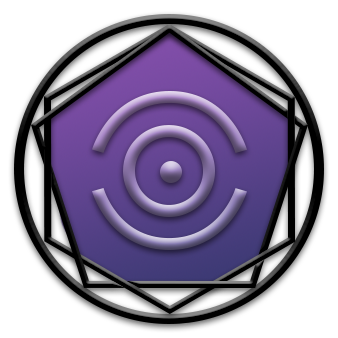
The sigil of Na is drawn as a hollow inner circle encased within a larger broken one, its outer ring split into two arcs that curve above and below the void at the center.
To many, the three strokes of the symbol represent the three dimensions of space: the inner circle as depth, the upper arc as height, and the lower arc as width.
Others interpret the sigil more darkly, claiming that the central circle is Na themself—the void entire—while the broken arcs depict Ea and Ts’ol fractured around them. In this reading, time and energy bend and shatter against the hollow, proving that when all else fails, emptiness remains untouched at the center.

Pantheon
Na does not gather a court, nor do they splinter into lesser aspects. Emptiness is indivisible, after all, what fragments would remain once divided? Yet Na is not without entanglement. A few deities are named alongside them, not as servants nor children, but as forces caught inevitably in their breadth.
Ea, deity of energy, is said to be Na’s eternal counterpoint. Where Ea fills, Na empties; where Ea moves, Na stills. Their tension is described as the first circuit of creation, the balance that allows existence to endure.
Ts’ol, deity of time, is likewise bound to Na. Without the void, there could be no measure, no turning, no stars to mark the clock of days. Myths often tell of eclipses as Na swallowing Ts’ol, only for the sun to return, proving that while the darkness may eclipse time, it cannot yet erase it.
Gox, the overdeity of destruction, is the name most feared in connection with Na. In the oldest prophecies, it is said that when Gox fulfills their namesake, Alekia will collapse into silence, and all that was will return to Na’s vault.
Beyond these, few connections are spoken. Some cults whisper of forgotten children—phantoms of entropy, shadows of absence—but such claims remain contested, and many scholars deny that Na could ever share their being.
Myths and Legends
Title to Come
Check back later…
Title to Come
Check back later…