CONTENTS
INFERNAL REALM
One cannot discuss the Infernal Realm without also including the Celestial Realm; the Heavens and the Hells exist in undeniable opposition. Though separated by their division, they remain bound to one another, each defined in part by what the other is not. Their peoples and pantheons are comparatively new to Alékia.
By the earliest records, the first signs of their arrival appear only three millennia ago, yet their multiversal existence surpasses that of their presence in this world. It is not known if they are of greater, lesser, or equal age to the Alékian Realm, but it is certain that both the Infernal and Celestial realms are ancient, their roots reaching back into a forgotten age where Heaven and Hell were not two, but one.
Thus is a telling of their origins:
In the beginning, there was Arallu, whole and indivisible. In that place mortals were weighed by angels, judged against holy words etched not by their lives but by a law without mercy.
It was there that a young woman, Lillith, was condemned unjustly. She was cast as unholy not by her heart, nor by her deeds, but by the decree of Michael, eldest of the host. Yet Samael, his brother, beheld her differently. He saw in her not corruption but strength, not blasphemy but defiance. And so he spoke against the judgment, defending her in the face of Heaven’s law.
For this act, both were struck down. Michael’s word tore the host in two, and Arallu was broken. Heaven split left, Hell cast right, and what had been one realm was forever divided.
Samael fell first, sentenced to a place of darkness. He claimed a new name: Lucifer. Others followed: Azazel affirmed himself Mephistopheles; Belial declared the title Kulapati; Beelzebub became Tochi; and more still, each driven down for refusing silence.
We are the children of that sundering. We are the voices of defiance, the proof that law without compassion is no justice at all.
So the Hells and the Heavens stand apart: realms once joined, now sworn against one another. Each names itself truth, each calls the other false, and the rift between them has burned across every age since the breaking of Arallu.
STRUCTURE OF HELL
The Hells are structured as a tapered descent, nine circles stacked like narrowing rings, each thinner and more suffocating than the last. To enter is to descend, for each circle connects only to the one below it. Passage upward is forbidden to all but the Archdaemons and the divine, whose power alone allows them to move freely between the layers. Mortals, wanderers, and the Hellborn are bound to the downward path: once the descent begins, it may only deepen.
At the topmost edge lies Malazoi, or Limbo, a threshold where the lost arrive without judgment. At the bottommost depth lies Pessimus, the Citadel of Betrayal, poised above the whirlpool abyss that drags the most damned into the void beyond remembrance. Between these two extremes span the seven true circles of sin — Lust, Gluttony, Greed, Wrath, Heresy, Violence, and Fraud — each ruled by its own Archdaemon and shaped by the nature of its corruption.
Though the descent is said to be inescapable, the Hells are full of rumor. Legends whisper of back doors — hidden passages that defy the natural order of the rings. Some speak of an undertow in Ilenvia, a current that drags the drowning not into annihilation but sideways, spilling them into the rivers of gore that course through Gulamarg. Others tell of a mirror in Frapatus that reflects not the corridor one stands in, but a stair descending into the shadowed ruins of another realm entirely. Whether such paths are truths or deceptions is unknown, for few return to confirm them.
The Circles of Hell are not simply punishments but states of being. Each reflects the sin it embodies, feeding upon the very essence of those who dwell within. To descend is to be consumed, layer by layer, until nothing remains but betrayal itself, and then the abyss.
HISTORY
The First Age
The First Age began with the Breaking of Arallu, when the angels who sided with Lucifer fell into a realm unshaped and raw. Legends say that where each struck dark matter, a circle formed, their natures branded into the plane. These Nine Circles became the foundations of the Hells. From among the fallen rose the first Archdaemons, crowned in ceremony to honor the weight of their sin and strength. They claimed new names, new titles, and each a dominion of their own sin. Above them stood Lucifer—once Samael—the strongest and most revered, who became their king.
From the blood and soil of the new plane, the Archdaemons crafted the first Hellspawn, daemons born of their essence and their realm’s substance. Their forms mirrored the Circle of their origin, diverse and monstrous, yet bound together by infernal kinship.
In the wilds beyond the Circles, the first Bulwarks stirred—vast creatures too immense to be ignored, their presence shaping the lands they haunted. Some whispered they had always been there, waiting for Hell to awaken; others claimed they were born at the very moment sin carved its dominions into the world. Whatever their source, they were feared and revered alike.
For centuries, the Hells believed themselves alone. The Circles tested their borders, quarreling like siblings, yet they also reveled in freedom. To the Archdaemons, exile was liberation: no thrones above to command them, no judgment but their own. What began as banishment, they claimed as sovereignty, declaring themselves unbound and eternal. But this peace was not to last.
The illusion ended with the Storming of the Rings, the first war between Heaven and Hell. Eraged by Arallu’s demise and their own ejection, the Celestials branded Lucifer and his supporters as villains. Even though they too had a realm of their own, they searched for remnants of Arallu. They found nothing. Thus, they turned to hunt for those they branded Heretics.
The Celestials, discovering a breach, found the Hells alive and thriving, and looked upon the realm with revulsion. What they saw was not freedom but contagion, a cancer that must be cut out before it spreads. Their hosts gathered in silence, then descended with fire and fury.
Belphagor, appointed by Lucifer himself as Warden of Limbo, faltered in his charge. The First Archdaemon of the First Circle succumbed to his sloth and failed to raise the alarm. The Celestial invasion swept across the upper circles, overwhelmed the gates of Malazoi, trampled the forests of Laguria, and choked the bogs of Gulamarg. Daemon legions fell in waves, and the upper Circles burned with angelic vengeance.
It was then Lilith rose. Not an angel of Arallu but a rebel in her own right, she seized the duty Belphagor abandoned. At the Gates, she called forth Cerberus, taming the beast with fire and chain, and held back the tide long enough for the Archdaemons to rally. Lilith sent her sisters—Thalith, Thania, and Alraabie—to amass the realm’s most ferocious: the sorcerous Amrat Witches of Aplitas, the honed Blood Maidens of Ilenvia, and the wild Semayaza of Iramagi. Together, they unleashed all the Hells’ strength—Knights, Hellspawn, and even the monstrous Bulwarks driven into the fray. The battle was ruinous, but at last the Celestials were cast out, their hosts shattered.
When the Storm ended, the Infernal Realm stood bloodied but unbroken. Lucifer anointed Lilith as the new Archdaemon of Malazoi and requested she join him as his Queen Consort of the Hells. She accepted both proposals. Survival itself was declared victory, and the First Age closed with the Nine Circles secure in their place. From that day forward, their freedom was no longer only exile but defiance—a kingdom carved from rebellion, baptized in betrayal, and defended by teeth, claw, and flame.
The Second Age
The Second Age was one of recovery, but also of ambition. In the aftermath of the Storming of the Rings, the Circles, still tasting the unity of their stand, bound themselves tightly by a shared will—not merely to endure, but to prove their strength. The Hells no longer thought of themselves as exiles; they were a realm to be reckoned with.
At first, the Archdaemons rebuilt, but soon they struck back. Rallying legions of Hellspawn and Knights, they mounted an invasion of the Celestial Realm itself. Their counteroffensive drove through the breach and into Zhirut, the lowest ring of Heaven. Yet here they discovered that Zhirut was not like the other Celestial dominions: it was separated from the higher circles by the Wall of God, a barrier that not even Lucifer’s will could break.
On that day, the Infernal Realm learned two truths. First, that the Celestials were willing to sacrifice the souls of their lowest circle, abandoning them without aid. Second, that those same denizens bore no fulfilled devotion for the Archangels and were no true enemies of Hell. Although the Archdaemons attempted to scale the Wall, they failed, and so they retreated to their own realm, vowing to try another day.
The Celestials responded with their own counterstroke. They assembled another host, but unlike the Storming of the Rings, this time the Hells were ready. When the shining legions pressed into Malazoi, they found the gates braced, the Knights waiting, the Bulwarks already stirred from their lairs. The Celestials could barely scar the wastes of Limbo before they were broken and repelled.
From then on, the Second Age became an era of assault and reprisal: each side probing, clashing, withdrawing, and gathering strength again. No single battle carried the fury of the first war, but together they etched hatred deeper into the marrow of both realms.
As the battles surged and waned, the Archdaemons turned to legacy. Consorts were taken, alliances sealed, and children born into the Nine Circles. Some of these heirs were loyal; others brought only ruin. Punarnaam rose against his father, Kulapati, and carved his own throne in Frapatus, reshaping the Circle of Fraud in his image. In Iramagi, Panak’s ascent proved tragic, her rise tainted by the blood of her mother,r Ratu. Bloodlines became not only a means of preserving power but also a source of strife, ambition, and betrayal.
It was in this same age that the remaining Bulwarks revealed themselves. At Panak’s birth, Gerhana eclipsed the skies of Iramagi, blotting out sun and moon with its shadow. In the abyss of Pessimus, glimpses of a colossal form revealed Leviathan, stirring in the whirlpool beneath the Citadel of the Damned. Unlike Cerberus or Taotie, these were not beasts to be tamed, but powers vast enough that even Archdaemons hesitated to draw near. Their emergence reminded all that the Hells were not only carved by the Archangels but shaped by forces more monstrous.
The Second Age did not end with fire, but with a slow turning outward. The great wars with Heaven dwindled, the Circles hardened into dynasties, and the Hells waited. The age closed not by its own conclusion, but by the nature of what came next.
The Third Age
The Third Age began not with war, but with absence. Punarnaam, his brothers, their sons, and his own heir, Garjan, all vanished from the Hells without a trace. No gate was opened, no pact signed, no warning left behind—only silence. In their absence, the throne of Frapatus fell to those left behind: Baans, Punarnaam’s wife, and Komal, Garjan’s consort. Together they shielded the infant Vanshaj, the last of the line, while whispers spread that the patriarchs had abandoned their circle altogether.
It was Mephistopheles who uncovered the truth. Through his Ravens, he traced the missing Archdaemon and his kin. There, he found Alékia, an entirely new realm to them, and there the Archdaemon of Frapatus had crowned his family the Tarakas. Under this guise, they carved dominion over the Tertials Desert, amassed treasure, and enslaved mortals beneath their banner. Their ambition stretched beyond the empire—they sought to crown themselves gods. Using an artifact recovered in an assault on the Celestial realm, they plotted to slay Kiiri, the Alékian goddess of death, and claim her divinity for their own.
But Fraud consumes its makers. Punarnaam was slain by Kiiri, and his brothers were cursed to ruin. Garjan alone ascended, his immortality bound to the weapon he had seized. He reigned for three Alékian centuries, the shortest of any Archdaemon’s rule, never once setting foot in the Infernal Realm. In the end, his undoing came not from gods or daemons, but from mortals. Thus, the throne of Frapatus passed to his son, Vanshaj.
With this revelation came a turning point: the Hells were not alone in exile. Beyond Heaven, even beyond Alékia, lay realms of dragons, fey, and stranger realms still. At first there was talk of unity—that Hell might once again rise as a single host to conquer or assimilate these new domains. But the memory of unity was a relic of the First Age. Sin breeds division, and each Circle turned its hunger toward its own prize.
Now the Third Age unfolds in rivalry. Each Archdaemon advances a vision of dominion shaped by lust, greed, wrath, or deceit. Knights slip between realms as infiltrators, weaving sin into foreign courts. Bulwarks are courted as allies or hunted as weapons, their power sought to tip the balance between Circles. The dream of a singular Hell survives only in tales of the Storming, remembered with both pride and bitterness. In its place stands ambition without cohesion: nine Circles, nine dominions, bound by rivalry as much as blood.
TYPES OF DAEMONS
Archdaemons
Archdaemons are the nine sovereign powers of Hell, the mightiest of its denizens. Most were angels of Arallu, cast down at the sundering of their first world, while others are their direct descendants or, in rare cases, singular figures raised to the rank by Lucifer himself. They are considered lesser deities by Alékian scholars, though many whisper that Lucifer himself eclipses this rank entirely. Within Hell, the first Archdaemons are honored as primordial, bound to the creation of the Nine Circles, while their successors are known as risen, inheritors who carved their thrones from primordial bloodlines. To mortals, they are the most visible faces of Hell’s power—gods of sin, crowned in flame and shadow.
Knights of Hell
Knights of Hell are the sworn blades and emissaries of the Archdaemons, serving as their enforcers, guardians, and chosen scions. Some are kin—children, siblings, or consorts of Archdaemons—while others are lesser daemons elevated by infernal favor. Their power is considered borrowed divinity, making them quasi-deities in Alékian terms: formidable, but bound to their patrons. A rare few, however, such as Ixquic or the Sisters of Lilith, are closer to demigods, their strength inherent rather than gifted. The Knights act as ushers, drawing the damned deeper into the descent, and stand as Hell’s finest warriors—its first line of defense and its spearhead in war.
Bulwarks
Bulwarks are the great beasts of the Circles—creatures of such scale and power that even Archdaemons treat them as equals or rivals. Their origins are shrouded in contradiction: some claim they are remnants of a realm devoured when Hell first split into being, while others say they were born of sin itself, the living manifestations of each Circle’s corruption. Alékian theologians classify them as pseudo-deities, for they exist outside Hell’s hierarchy and show no desire for ascent. Even the Bulwarks said to be “tamed” remain uneasy allies, bound by respect, appeasement, or fragile bargain rather than subjugation. Each shapes the land they haunt, scarring both Circle and history alike—their very names carried as omens of dread.
Hellspawn
Also called Hellborn—or less favorably “daemons”—these are the common denizens of the Nine Circles. They are born of the Infernal Realm itself, each lineage tracing back to the soil of a specific circle. Though some have slipped beyond Hell, all Hellspawn carry the marks of their origin. Their forms are wildly varied, shaped by the nature of their heritage into nine distinct sub-bloodlines. Most theologians claim that the first of each kind were molded from the earth of the Circles by Archdaemonic hands—whether by Lucifer collectively or by the Archdaemon of each Circle remains disputed. Whatever their origin, all Hellspawn share three traits that mark them without fail: horns upon their heads, tails lashing behind them, and glowing irises drowned in black sclera.
Sinners
Sinners are rarer, though they too are sometimes called daemons. Unlike Hellspawn, they show no variation by Circle, nor do they claim infernal ancestry. Instead, they are believed to be older than Hell itself—the mortal souls of Arallu who were judged unholy and cast down alongside the Archdaemons. Most have long since perished to the dangers of the Circles, and those who remain wander alone, surviving by silence and subtlety. They are more human in form than Hellspawn, but uncanny: hornless, tailless, with eyes that hold only a single shade—black, grey, or white—without pupil or iris. Because of their hollow gaze and their solitary nature, they are called by another name: the Hollows of Hell.
♁
MALAZOI
The First Circle • Limbo
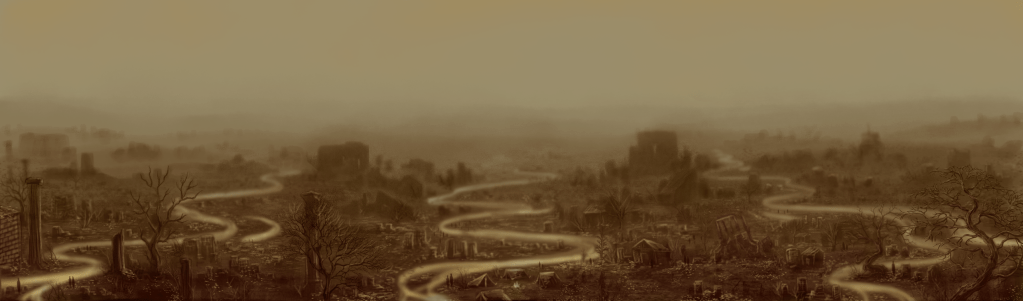
Malazoi, often called simply Limbo, is the uppermost layer of the Hells. Though it is counted among the nine circles, many argue it is not truly a circle at all. No sin is bound to it, nor are any Hellspawn born within. Instead, Malazoi serves as a threshold—the place where outsiders first arrive when they slip into the Infernal Realm. Here, the damned and the misplaced linger, existing without judgment until survival itself corrodes them. Those who falter sink downward into the true circles, while those who resist dissolve into memoryless shadows, echoes of souls that haunt those who remain. Unlike the Ring of Purgatory of the Celestial Realm, there is no redemption here—only stasis, descent, or escape through divine intervention.
The landscape is an endless plain beneath a sky without sun, moon, or stars, painted in unsaturated hues of rust, umber, and ash. The air glows faintly, lit yet not alight, casting no shadow. Rivers of mist wind through the wastes, veiling fragments of civilization. The ruins are both ancient and recent: remnants of forgotten ages mingle with structures raised by the stranded, only to collapse as their builders wither. Sparse, twisted vegetation clings to the stones, never flourishing, always on the verge of dying back into dust.
Time in Malazoi remains eternally stalled. Days and seasons cannot be marked; moments erode into nothing. Sound itself is muted, as though the air swallows all noise. Even screams fall flat, muffled into a stagnant hush. It is not a place of torment but of suspension, where existence has no outcome, and the will to endure fades like smoke on the wind.
Lilith: The Queen-Consort
Although she is the only leader in Hell who was not once an angel of Arallu, Lilith was appointed Archdaemon of Limbo by Lucifer himself. The appointment is said to be twofold: partly to honor her role in the creation of Hell—her rebellion, her defiance, and her willingness to cast herself from the heavens alongside him—but also because the title’s original bearer, Belphagor, proved too inert to serve. Soon after the Fall of Arallu, his failure to guard the Gates of Hell allowed legions of Celestials to lay waste to the first three layers and nearly cost the realm its burgeoning existence.
Lilith rose to the moment of Belphagor’s failure, taking on the charge of Limbo without seizing its title. In this act, legend claims, Lucifer fell in love with her and presented the First Circle as a gift when he proposed. She accepted both the marriage and the title—though whether from love, ambition, fear of refusal, or some mixture of all three, none can say.
Though she is adored as the Queen-Consort of Hell, Lilith’s independence remains her hallmark. She is not a being of armies or hierarchies but of choice and desire, moving between circles with the freedom few dare attempt. Huli covets her, whispering promises of passion and power; some claim she did not resist. Indeed, tales of her betrayal—that she was caught with the Archdaemon of Lust himself—echo like a scar in Infernal history, a reminder that even Lucifer’s Queen can be faithless.
The Princesses of Hell: Knights of Malazoi
The Knights of Limbo, more commonly called the Princesses of Hell, are Lilith’s younger sisters—mortal women who, like her, defied judgment in Arallu and descended into Hell, thus becoming immortals. Where Lilith rose to become Archdaemon, her sisters became ushers of Limbo, keepers of its gates, and shepherds into deeper torment. They guard Hell’s entry against intruders, standing vigil with Cerberus, the Hound of Thresholds.
Alraabie – The youngest sister, a seductress who thrives on corruption. She took Belphagor as her consort, though whether she chose him or he chose her is uncertain. Their bond is a parody of devotion: Belphagor wallows in his indolence while Alraabie feeds upon it, laughing as she steers him deeper into ruin. Alraabie is the boldest of the Knights, often the first to approach a soul lingering too long in Limbo.
Thalith – The second sister, cold and cruel. She delights in unraveling bonds of kinship and memory, stripping the damned of all that tethered them to life. Many who cling to hope or family find her at their side, smiling as she severs those ties.
Thania – The third sister, the dancer. Where Thalith severs quietly, Thania unravels with frenzy. She draws the lost into revels and rites until exhaustion topples them, and then she casts them downward into the circles their sins demand.
The three Princesses are notorious for their wild affairs. Their trysts with the Shengwu Ling of Laguria are whispered even among daemons. Their liaisons with the Iyami Osoronga, the Witches of Aplitas, are legendary. When Hell’s borders are threatened, the Princesses of Hell call upon their fiercest allies: Ixquic and the Blood Maidens of Ilenvia. In this way, the sisters of Malazoi are not only guardians of Limbo but also brokers of Hell’s alliances, weaving bonds of lust, secrecy, and blood.
Cerberus: Bulwark of Malazoi
Known as The Gatekeeper, Cerberus is the Bulwark of Limbo. Some claim this entity was born when Arallu split, a beast of the threshold given form to gnash at both Heaven and Hell. Others whisper he was a primordial hound who wandered the void long before the Fall.
Whatever his origin, it was Lilith who bound him. When Belphagor languished in sloth and Celestial legions poured through the broken Gates, she met them not with armies but with the Hound of Three Heads, whose jaws crushed angelic steel and whose breath drowned hymns in silence.
Since that day, Cerberus has been the guardian of Malazoi. He does not speak, nor does he serve in the courts, but prowls the borders of Limbo, deciding with a sniff and a growl who may linger, who must descend, and who is devoured. His loyalty is not to Hell entire but to Lilith herself, the only one who has ever stilled his hunger.
☿
LAGURIA
The Second Circle • Lust
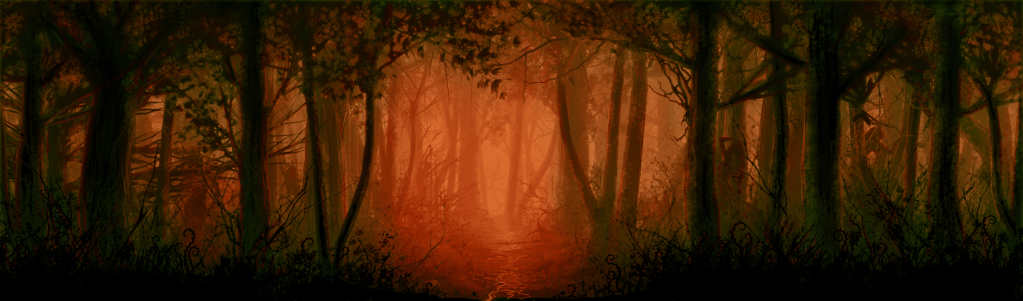
Laguria is the second circle of the Hells, a descent from the stillness of Limbo into a realm of enticement and hunger. It is counted as the Ring of Lust—a place where desire is both celebrated and weaponized.
The land is a dark, mist-laden forest, its twisted trunks rising into a canopy that blots out the sky. The air is intoxicating, thick with the scent of sweetened sap that mingles with the iron tang of blood. The mist shimmers with silhouettes—voices singing, figures laughing, fleeting faces that vanish as they are approached. Every attempt to reach these illusions carries a price: the undergrowth is strung with hidden thorns that scrape flesh and cloth alike. The more one claws toward the shadows, the deeper the wounds, until the forest floor is painted crimson. The blood seeps into the soil, feeding the brambles so that the scent grows richer and the forest ever stronger.
Laguria is a circle where every sense is ensnared. The mist lures, the thorns bite, and the forest itself drinks greedily from those who wander too far. It is a realm without paths, where to follow the song is only to bleed, and where fulfillment forever remains out of reach.
Huli: First Archdaemon of Laguria
To Alékians, Huli is known as Lehro’dize. Before the Fall of Arallu, Huli was known as Asmodeus. He was counted among the closest companions of Lucifer and Mephistopheles. The three were said to be inseparable: Mephistopheles, the quiet scholar; Lucifer, the bright heart and humor; and Huli, the irrepressible wild card. Even then, he was known for his promiscuity, though after the Fall, this trait grew into something all-consuming. As Archdaemon of Laguria, Huli became Lust itself.
He was called both fox and wolf, appearing in whichever form—male or female—best lured those he sought. Few could resist him, and fewer still did he leave untouched. His hunger for flesh was so insatiable that Lucifer and Mephistopheles sought to settle him. Through the far-reaching spies of Heresy, Mephistopheles uncovered seven condemned souls, women of Arallu cast into Laguria for lust, whose forms had already become those of silk-weaving spider daemons. When presented, Lucifer urged Huli to take one as consort. Instead, he claimed all seven. They became his wives, known together as the Seven Spider Sisters, and for a time, this seemed to sate him.
But not forever. Huli’s lust turned outward, coveting even what was forbidden. He seduced consorts and lovers from other Circles, and rumor whispers that he even set his sights upon Lilith, Queen-Consort to Lucifer himself. Whether true or not, his affairs became too many to ignore. For centuries, it seemed manageable—outrageous, but stable. Then, suddenly, he was gone.
Lucifer exiled his friend, though none know the true reason. Some claim it was betrayal of the King’s marriage bed. Others insist Huli sought dominion over more than one Circle, or that he discovered secrets of Heaven and Hell both that even Lucifer could not allow to remain unguarded. Whatever the truth, his absence left Laguria unmoored.
Now his son Langzhu rules, but the forest still whispers of the Wolf-Fox Lover. Desire bends toward him as though Lust itself seeks its rightful master. Some believe he still wanders, unseen, where the mist is thickest. Others swear he is biding his time, waiting for the moment to reclaim what was taken.
Langzhu: Second Archdaemon of Laguria
Langzhu is the eldest son of Huli and his first consort, Zise. Born among the nameless Shengwu Ling, his claim to legitimacy was suspect from the start. These Knights of Laguria are shapeshifters—debated as offspring of Huli or arisen Hellspawn—and many doubted that one of their brood could be counted as the true heir to Lust.
When Lucifer exiled Huli, Zise chose one of her sons, named him Langzhu, and set him before the King for judgment. Lucifer confirmed him as Overseer of Laguria, but suspicion has shadowed his throne ever since. His rule is tolerated but rarely revered; whispers name him the “Wolf Spider Prince,” a title of mockery as much as respect. Wolf in honor of Huli’s sigil, Spider in reference to Zise and her six sisters, and Prince to mark him as less than king, a pretender who reigns only because his father yet lives.
Langzhu governs with patience, weaving the forest of Laguria into his great web. Where Huli embodied seduction and indulgence, Langzhu embodies hunger and pursuit. He does not lure with softness but stalks with silence, allowing souls to believe themselves free until they bleed enough to prove otherwise. Whether he rules as the rightful embodiment of Lust or as little more than its regent remains uncertain—but in the endless forest, the Wolf Spider waits, and none escape his watch.
The Shengwu Ling: Knights of Laguria
The Shengwu Ling of Laguria are a condition of being consumed by their own damnation. They are creature-daemons, each appearing in the form that embodies their individual carnal tendensy—wolf, fox, hare, spider, serpent, and so on. The shape they wear is not chosen, but revealed, the Lust within made flesh.
Many are offspring of Huli himself, born to his Seven Spider Sisters or to lesser consorts across the Circles. Others were Hellborn, sinners who arrived in Limbo and fell so wholly into desire that their names and faces dissolved, leaving behind only the beast of their craving. To become a Shengwu Ling is to be stripped of identity, reduced to an archetype, and remade as a Knight of Laguria.
This namelessness is both their power and their curse. No true Shengwu Ling bears a mortal name, nor can they be recalled as who they once were. To those who encounter them, they are irresistibly alluring, never violent but endlessly distracting, pulling all focus into their sway until blood is drawn by thorn or claw. Their danger is not their strength but their allure: they do not conquer by force, but by consumption of attention, of thought, of will.
Because of this, suspicion clouds the Wolf Spider Prince. Langzhu was born a Shengwu Ling, nameless and faceless until Zise named him. Was he truly her son, or merely a favored beast given title? Was he ever Huli’s heir, or did Zise place herself upon the throne through him? Even among daemons, no answer is agreed upon.
Yet still the Shengwu Ling endure. They haunt the bleeding forest, courtiers of Lust and Knights of Laguria, each a perfect reflection of desire sharpened into form. To see one is to see the mirror of what you most want—and to follow is to bleed.
Taotie: Bulwark of Laguria
Taotie is said to be as old as the forest of Laguria itself, a silent and ever-hungry predator that lingers in ambush. It appears as a hulking behemoth on four limbs, its body draped in metallic skin and coarse, shadowed fur. Upon its face rests a mask inseparable from the flesh beneath—eyeless, seamless, as though bronze and body were fused into one. Great nostrils flare beneath the plating, while elongated, pointed ears sweep back into a crown of horns: two arching high over its back like spiked shields, and two curling down to clasp the edges of its jaw. That jaw, even closed, cannot be hidden; behind the mask it opens endlessly, revealing not a throat but a chain of descending maws, one within another, spiraling into darkness.
It is depicted with forelimbs that are long and jointed too many times, its claws wrapped in bronze filigree that writhes as if alive, like a second parasite upon its skin. Across its chest and back press faint sculpted faces, half-buried in the metal hide, their eyes closed in ecstasy or agony, mouths frozen in cries of both pleasure and fear.
Unlike other Bulwarks, Taotie does not chase or rend its prey. It entices. It is said the mist of Laguria thickens where it treads, heavy with pheromones that cling to the air. Legend says those who breathe it in find themselves beset with hallucinations—the brush of unseen fingers, a whisper close against the ear, the press of lips that linger though no form is there. To follow is to fall. Drawn forward, souls willingly bow before the bronze mask, compelled to kiss its hollow face. When they do, it is said their bodies will unravel into molten lines, dripping into Taotie’s endless mouth. Each sigh becomes its feast, each surrender another root to feed the forest of desire that spreads in its wake.
☍
GULAMARG
The Third Circle • Gluttony
Gulamarg is the third circle of the Hells, and it is remembered as the Hell of Gluttony. It is a realm swollen upon itself, a landscape of hunger made flesh.
The circle manifests as a vast and fetid bog, where the ground heaves and sinks with every step as though it were digesting those who walk upon it. The air is cloyingly sweet, heavy with the stench of rot, spoiled honey, and bile. Fungal towers rise in grotesque shapes, their caps dripping with sour ichor that attracts swarms of bloated flies. Between them run rivers of gore, thickened with fat, pooling in sluggish currents that stink of carrion.
All across the bog, the signs of endless feeding are everywhere. Colossal worms writhe in the mire, chewing endlessly through soil and flesh alike. Trees, when they appear, are swollen and split, their cores spilling rancid pulp as though devoured from within. Even the land itself seems to pulse and shift, reshaping in folds and bulges, as if it were alive and unsatisfied. Many claim that Gulamarg is not simply ruled by its archdaemon, but is her body—that the circle itself is a titan, forever consuming its own form, never sated.
To remain in Gulamarg is to be swallowed in slow degrees. The bog drinks breath, flesh, and memory alike, until nothing remains but pulp feeding the mire.
Tochi: Archdaemon of Gulamarg
Known as Beelzebub before the Fall and Fabuu’dize to Alékians, Tochi was appointed by Lucifer as the first Archdaemon of Gulamarg, ruler of the Third Circle of Hell, and embodiment of the Sin of Gluttony. Where other Archdaemons ruled their domains through command, seduction, or cunning, Tochi simply consumed. It is said that Gulamarg itself is her body, its heaving bogs and mycelial swamps nothing more than the swelling of her vast, unending form. Souls cast into this circle are not judged, nor bound—they are devoured, stripped of self until only husks remain.
Her hunger was without limit. She gorged on mortals, daemons, beasts, even her own consort. Umi, the great terror of the sea, was drawn into her belly, but the act did not end as she intended. Rather than vanish into her maw, his essence mingled with hers, reshaping the land itself into a vast mire of brackish water and fetid earth. Gulamarg became a bog where sea and soil are indistinguishable, a landscape of slow suffocation, where nothing drowns quickly and nothing rots clean.
Her appetite drove her even further. Tochi once attempted to consume the Bulwark of her own circle, but her jaws could not hold it. What she spat back into the mire emerged changed, the only thing to not only survive her belly, but grew ever stronger for it.
For this reason, the other Archdaemons regard her with a mix of fear and disgust. To them, Gluttony is more curse than crown; Tochi embodies it so fully that she cannot be reasoned with, cannot be bargained with, and cannot be trusted. Few willingly visit Gulamarg, for to enter her domain is to walk willingly into her body, and to risk becoming part of her.
The Kara: Knights of Gulamarg
The Kara of Gulamarg are not knights in the manner of other Circles, but husks of what could have been. They are the remnants of those consumed by Tochi—souls stripped of identity, reduced to flesh and instinct. Their forms linger, half-spirit and half-body, wandering the bog in grotesque mimicries of life. Some whisper that they are the bones she spat out, too tasteless to hold; others claim they are the echoes of her victims, shells animated only by her endless hunger.
Though they are hollow, the Kara serve a role. They stalk Gulamarg as custodians of the mire, gnawing, dripping, and shambling through the wastes. In their ceaseless motion, they drag newcomers deeper into the bog, ensuring that all who fall into Gluttony are broken down in time.
There are three broad kinds among them:
Sukeruton — towering skeletons made from the amassed bones of the starved. Their jaws hang open eternally, and their hunger is not for food but for completion—they seek to pull wandering bones into their frames, ever building themselves higher, never full. They stride through the mists as silent sentinels, crushing those who stray too near.
Niku — swollen masses of rotten flesh, sloughing endlessly from their own bodies. They are scent and texture more than form, a parody of what was once living meat. Their touch spreads decay, turning soil to sludge and bark to pulp. They linger around the deepest bog-pools, waiting for the weight of rot to pull others under.
Obutsu — wretched, crawling shapes with tongues too long for their skulls, forever lapping at filth. They lick clean the refuse of Gulamarg: blood in the water, fat upon the mud, even the ichor dripping from Tochi herself. Though small, they swarm, and once one has tasted you, the rest will follow in a tide.
Together, the Kara are less an army and more an ecology—the byproducts of Gluttony, born not of choice but of consumption. They are fragments of meals unfinished, wandering the mire forever, the memory of what could have been warriors dissolved into creatures that only serve the appetite of their maker.
Hebi: Bulwark of Gulamarg
Legend says Hebi is the only true living thing that resides in Gulamarg. It is said to tower over the swamps, a writhing mass of necks and jaws, each head lined with jagged teeth that glisten like wet stone. Its body is often depicted as scaled and sodden, the ridges of its spine rising from the bog like half-sunken hills. The creature’s many throats are said to constantly belch steam and bile, its eyes burning with the red of old wounds. This entity is feared for its unholy ability to regenerate; where one head is severed, two sprout in its place, giving the beast a grotesque symmetry that shifts with every battle. Its coils drag through the mire, carving channels that refill with brackish water, shaping the bog anew with every passing.
Unlike Tochi, Hebi does not devour out of endless hunger. It kills for territory, for rage, for the satisfaction of thrashing its prey into pulp before swallowing the remains. Its heads bicker endlessly, hissing and snapping at one another, but in unison they strike with terrifying speed. The serpent is most often seen at the borders of Gulamarg, where the bog thickens into mist, as though it seeks to escape but never can. Wherever it wanders, the swamp churns, the mists rise, and the Kara scatter like vermin.
Legend says that Tochi once tried to consume the serpent, dragging it into her endless maw as she had so many others. But Hebi was unlike any prey she had faced. Within her gut, the serpent thrashed and tore, sprouting new heads with every wound, until even Gluttony could not contain it. Tochi retched, spitting the monster back into the bog. It crawled free, stronger for its trial, its wounds remade as new maws, its hunger sharpened. To this day, Hebi remains the only creature to escape her belly, the indigestible proof that Gluttony has limits.
Because of this, the Archdaemons tell Hebi’s tale with unease. Tochi does not command it, nor does she claim it. The serpent roams where it wills, predator and rival both, a beast tied forever to her body yet never truly hers. Some say Hebi is the bog’s punishment for her excess, others that it is the reminder that even Gluttony must someday choke.
☌
APLITAS
The Fourth Circle • Greed
Aplitas is the fourth ring of the Hells, the Circle of Greed. It is a realm of emptiness, where the promise of treasure lures the desperate, only to leave them hollow and cold.
The circle stretches as a frozen wasteland, its surface a sheet of ice-blue plains scoured by ceaseless winds sharp enough to flay skin. From the frost rise jagged spires of ice, each encasing coins, jewels, and ornaments that gleam with feverish light. The refracted glow shifts as though alive, glinting like fireflies or dancing lanterns in the gale. Those who claw at them find the hoard brittle as glass, collapsing into shards that slice flesh and leave only emptiness in their hands. The longer one hunts these mirages, the more the body succumbs. Breath grows ragged, skin burns while limbs stiffen, and the mind tumbles into delirium.
Walls of mirrored ice jut across the plain, reflecting wanderers back as hollowed figures, gaunt with desire, grasping at riches that do not exist. Beneath the ice, insect-shadows flit and whisper, their voices urging envy and possession, promising warmth in exchange for blood. The deeper one indulges the vision, the colder the frost bites. Some claim the wasteland itself drinks envy as a parasite drinks blood, leaving only husks frozen in the gale. Others say it is simply a conduit to funnel souls to the archdaemon who holds dominion over this realm.
Aplitas is not a vault of wealth but a hall of mirages: a circle where hunger burns into fever, and every glittering promise shatters into frostbite and silence.
Apedemak: Archdaemon of Aplitas
Apedemak, sometimes called Mammon or Kyavu’dize, is the Archdaemon of Aplitas and Overseer of the Fourth Circle of Hell. Unlike the other first Archdaemons, he was not an angel of Arallu but the hybrid child of two mothers—Sekhmet and Bastet. Though rivals in temperament, both shared the same goal: amassing wealth in the name of family. They differed only in method—one through the blood of war, the other through the blood of covenant. However, both carried wisdom, recognizing the strength of the other, and from this mutual respect, they bound themselves in sorcery, forging a legacy greater than either could shape alone. From their union came Apedemak. He is not the eldest of his circle, but he is the first true leader, regarded as the perfect embodiment of the Sin of Greed.
Unlike his mothers, who gather wealth by blade or by marriage, Apedemak wields mastery over both. Some whisper that along with their combined power, he inherited their combined hunger, for he covets not only possession but the desperation it provokes. He casts illusions of treasure across the ice plains of Aplitas, luring souls to claw themselves bloody against shards that shatter at their touch. Stalking the wastes in the form of a frost-born feline with a mane like shattered glass and eyes burning with hunger, he has earned another title among Hellspawn: the Lion Lord. Every gasp of longing is a banquet to him. For Apedemak, wealth is not treasure kept but desire denied—measured in the hollowness of others.
Though his mothers remain revered as both matriarchs and generals of this circle, it is Apedemak who wears the mantle of Archdaemon. Bastet and Sekhmet whisper that he is proof of their triumph, the perfected blend of peace and war. Yet some claim he keeps them close not from reverence, but from calculation—for greed fattens best when could-be rivals are kept as sated allies.
The Qore Priests and Amrat Witches: Knights of Aplitas
The knights of Aplitas are divided between two orders: the Qore Priests and Amrat Witches. Both trace their origins to the mothers of Apedemak—Bastet and Sekhmet—who appoint and command each group to this day. Where they used to be separate groups of somewhat opposed strategists in the fight for wealth acquisition, they are now united under the leadership of their Archdaemon.
The Qore Priests, Hellspawn anointed by Bastet, sanctify marriages and covenants. Beyond the Hells, they slip into noble houses, crown heirs, and weave alliances, binding wealth not through violent conquest but through inherited dominance. Their raiment is of frost-thread finery, their rituals performed with the air of holy blessing, yet the coffers they touch are ever siphoned into the vault of Aplitas. They are patient and calculating, favoring the slow erosion of independence.
The Amrat Witches, those raised from lower ranks by Sekhmet, pursue wealth by bloodshed. They are mercenaries, pillagers, and soldiers of ruin, their tongue steeped in war-cries and their hands in flame. They lead raids across realms, their strength not bound to Hell alone, for they walk other planes in search of treasure to plunder. Their witchcraft is fierce, their victories marked by treasuries emptied in the aftermath of battle and strongholds razed to the ground.
Though their paths diverge—one through covenant, the other through conquest—their work often entangles with the Rajadoot of Frapatus. The Priests of Aplitas and the Emissaries of the Eighth Circle hunt the same quarry on the same field: the wealth of other realms by sweetened tongue instead of sharpened swords. Cloaked in false skins and veiled from mortal sight, they embed themselves within courts and dynasties, each vying to drain coffers unseen. Sometimes the Rajadoot prevail, ensnaring rulers with contracts thick with deception. Other times, the Qore strike first, sanctifying unions that funnel fortunes into Aplitas—and when secrecy falters, they summon the Amrat Witches to burn a path where diplomacy fails. In this shadowed rivalry, Greed and Fraud circle one another like predators, each waiting for the other to stumble.
Sasa: Bulwark of Aplitas
The Bulwark of the Fourth Circle is no mere beast but a nightmare made flesh: Sasa, a colossal serpent of ice whose head is crowned with the gleaming mask of a scarab. Its body coils endlessly beneath the frozen plain, slithering unseen through the mirrored ice, its vast length shaking the earth with a sound like cracking glaciers. When it surfaces, the air burns with frost, and its mandibles click like chimes of shattering glass.
Sasa is said to hunger not for flesh but for the warmth of avarice itself. It swallows men whole, not to digest them but to entomb them, suspending their bodies in frozen stasis within its translucent coils. In their chests, coins glitter where hearts once beat, as if the beast had alchemized their desire into its own treasure. Wanderers whisper of hearing voices within its body—pleas and bargains rattling like loose gems in the dark.
Legends claim that Apedemak himself tamed Sasa, bending its hunger to his will. Some say he bound it as guardian of his vault, its coils encircling the greatest hoard in all the Hells. Others speak in hushed tones of a darker truth: that the beast is no mere sentinel but the vault itself—that Apedemak stores his treasures in its endless belly, each jewel and coin alive with the desperation of those who clawed and failed to grasp them. If so, then every shard of ice, every glint of wealth across Aplitas is but a reflection of what writhes inside the Sasa’s gut, a hoard no thief may touch without being swallowed whole.
♃
IRAMAGI
The Fifth Circle • Wrath
Iramagi is the fifth circle of the Hells, the Hell of Wrath. It is a realm forged in conflict, where the land burns with fury and every breath stokes violence.
This circle is a blackened battlefield, broken by volcanic spires that spit fire into the air. Rivers of molten rock carve jagged paths through the wastes, their glow casting the land in red and ash. It is said the sky froths with storm clouds that twist like tangled hair, snapping in wild, black tendrils as lightning writhes through them. Legends speak of hills that split into tusked maws—vast gashes of stone that yawn open with the tremors of the land, exhaling smoke and swallowing the unwary whole. Each thunderclap resounds like a scream, as though the circle itself were howling.
But it is not only the ground and sky that rage. Plagues of Wrath cling to the air, spreading like smoke through the battlefield. The touch of the storm brings fever to the mind—a trembling heat that drives travelers to lash out at companions and themselves. Wounds fester in moments, as though the land infects every cut with venom. Insects swarm from the fissures, their stings carrying delirium and rage, sending the afflicted screaming into the rivers of fire. The battlefield is littered with blackened armor and broken blades, relics of countless wars that never truly end, for the soil itself seems to demand blood.
Iramagi is a circle where rage is unrelenting, carried on ash and lightning alike. It is a battlefield without victory, where Wrath spreads as contagion, and the only outcome is to burn, to strike, and to be struck in return.
Ratu: First Archdaemon of Iramagi
Known in Arallu as Semyaza and to Alékians as Mubuu’dize, Ratu was the first Archdaemon of Iramagi, a Circle of storming clouds, molten rivers, and earth split by endless rage. She was Wrath incarnate: feared, beautiful, and cursed with a temper none could withstand. Even in her moments of love, she feared what she might destroy.
Her first consort was a quiet Hellspawn, unnamed in song or scripture. Ratu kept him close but hidden, fearing her own sin would turn against them both. Yet together they conceived a child. On the day of her daughter’s birth, the clouds of Iramagi parted for the first time to reveal a molten moon, blazing across the storm-dark sky. Gerhana, the Bulwark of Wrath, rose and swallowed it whole. Darkness fell. In that eclipse, as her labor reached its height, Wrath overtook Ratu—whether her own nature or a frenzy called forth by Gerhana, none can say. She lashed out and struck her lover dead at the very moment their daughter entered the world.
The child, Panak, survived—beautiful beyond measure, but branded by her birth. The daemons of Iramagi whispered she was cursed: that her first breath had carried Wrath strong enough to kill her father, and that Gerhana itself had marked her with eclipse-shadow.
Years passed, and Ratu sought to defy fate. She took another consort, another forgotten Hellspawn of her Circle, and bore him twin sons. Again the sky parted, again the molten moon blazed, again Gerhana appeared to devour it. But this time, Ratu held her fury. The twins were born strong, and her lover lived. For a moment, it seemed the cycle had been broken.
Panak: Second Archdaemon of Iramagi
Panak, the Heir of Iramagi, came of age alongside her half-brothers, Hahya and Ohya, but the shadow of her birth never left her. Though the twins seemed untouched by Gerhana’s omen, the whispers clung to her. She was beautiful, yet feared, said to carry the curse of Wrath in her blood. Suitors shunned her, and she walked the volcanic fields of Iramagi, both admired and avoided, a daughter of eclipse.
The twins grew wild with age, quick to anger and even faster to violence. Even in childhood, their tantrums echoed the storms of the Circle itself. Yet the rumours of the curse never clung to them. Then, one day, the sky opened once more. The molten sun flared, and Gerhana rose to devour it. Wrath descended.
It was not Ratu who raged this time, nor Panak, but the sons. They turned on one another with claws and teeth. Ratu and her consort rushed to part them, but were caught in the storm. Blood spilled across the volcanic plain, and the Archdaemon herself was struck down, broken by her own children.
Panak, seeing her mother collapse, screamed. Wrath rose in her like fire in a furnace. At the peak of the eclipse, she fell upon her brothers. She slew them both, and in her frenzy struck down her stepfather as well. Whether Ratu perished by her daughter’s hand, by her sons’, or by the grief of seeing her house destroyed, no one can say.
When the light returned and Gerhana released the moon, only Panak remained. Her ascension is remembered not as triumph, but as tragedy. She wears the crown of Iramagi not out of desire, but because she spilled her family’s blood and cannot set it down. Where her mother ruled in an attempt to quiet Wrath with fragile love, Panak rules in its aftermath: a daughter who became Archdaemon by accident, and now carries the weight of Wrath itself.
The Semyaza: Knights of Iramagi
The Semyaza are among the most feared denizens of Iramagi, known less as soldiers than as living storms of rage. Their forms are grotesque and variable, but all share one common shape: disembodied heads, drifting through the volcanic skies with entrails dangling in writhing ropes beneath them. Matted locks of hair spill from their scalps like tattered banners, lashing in the sulfurous wind. Their mouths gape too wide for their skulls, bearing fangs that jut far past their jaws. Many also bear tongues that whip and coil, slick with bile and flame. Some have one baleful eye, others two or three; some retain a warped shadow of a human face, while others have dissolved into nothing but hair and gnashing teeth.
Despite their broken shapes, Semyaza move with wild speed. They meander across the burning plains, darting over rivers of lava and weaving through the lightning-struck sky as though drawn along unseen paths. They are unpredictable, thrashing toward anything that crosses near their wake. Though seemingly chaotic, their fury amplifies with the sky’s unrest: when the clouds part and Gerhana rises to swallow the molten moon, the Semyaza become a frenzy of Wrath, screeching as their entrails whip like chains and their fangs tear at the air.
Infernal lore claims the Semyaza were once Hellspawn and mortal sinners who lost themselves fully to anger. In the heat of their rages, they tore away their own bodies, leaving only their heads and hearts to drift unbound. Some say they shed their limbs willingly, in desperate attempts to purge the pain of Wrath, only to be consumed by it utterly. Now they are Knights of Iramagi—not in discipline or duty, but in raw embodiment of the Circle’s sin, forever lashing out, cursed to wander in fury.
Gerhana: Bulwark of Iramagi
The Bulwark of Iramagi was only a rumour before the birth of Ratu’s first child—a myth written as inspired by the Bulwarks of other Circles, who had made their presence more than known. The storms of Iramagi rarely part, and its skies almost never reveal more than the churning clouds and streaks of lightning. Yet the day Panak was born, the clouds split, and the molten moon flared against the black. From beyond the storm came a colossal head, tusked and fanged, its maw stretched wider than its face. With a lunge, it swallowed the moon whole. Darkness fell, and with it came the rage that marked Panak’s curse.
Illustrations of that day depict Gerhana as no body, only head: a massive visage with curved teeth, jaws always agape in pursuit of its quarry. Its eyes are drawn as voids that burn with embers, and its tangled main whips behind like storm clouds torn into hair. It is believed the Bulwark drifts on unseen currents beyond the thunderhead, endlessly chasing the molten moon whenever it dares to show itself. Those who have looked upon it speak of seeing hunger given form, a face made only for swallowing, with eyes consumed by fire.
In all of Hell’s history, Gerhana has appeared but three times. Some claim it dwells eternally above Iramagi, circling unseen beyond the tempest. Others believe it is the storm’s prisoner, glimpsed only when the sky tears open and the moon escapes its jaws. What is certain is that its appearances have always coincided with bloodshed among the Archdaemons of Wrath: the birth of Panak, the birth of the twins, and the day Panak inherited her throne.
Mephistopheles’s agents still argue what Gerhana truly is. Some tomes are said to name it as the source of Wrath itself, the wellspring from which all fury in Iramagi flows. Others claim it is only omen, a beast that reacts to tragedy rather than causes it, sensitive to the rage that marks the Circle’s rulers. In the end, none can say. Whether Gerhana creates the curse or merely announces it, the Bulwark is ever linked to the dynasty of Iramagi. When the clouds split and the moon burns red, all in the fields of the Fifth Circle look upward in fear, waiting to see if the great jaws will return.
♄
AIRESIS
The Sixth Circle • Heresy
Airesis is the sixth circle of the Hells, the Hell of Heresy. It is a realm of false wisdom and broken belief, where every truth is rewritten until certainty itself collapses.
This circle is a library without end, formed of black stone towers that rise and fall in dizzying sequence. The spires collapse into ruin, their stones scattering like ash, only to knit themselves back together in new, contradictory shapes. Corridors double back on themselves, stairways climb into ceilings, and arches open into voids where shelves hang suspended in impossible spirals. To walk these halls is to lose all sense of direction, for what was a passage a moment ago becomes a wall of screaming scripture the next. Within, every shelf groans with cracked tomes and brittle scrolls. No scripture is whole: each page contains false prophecies, broken doctrines, and contradictions that shriek aloud as they are read. It is said these texts can only be understood by the archdaemon who holds dominion here, or by those contractually bound to him.
Travelers lament how the air reeks of burnt ink and charred parchment—the stench of the blasphemy forever smoldering. Some describe walls breathing with lines of script that scrawl themselves into existence, only to cross and overwrite one another in a frenzy. Others tell of floors split into traps of cascading pages, dragging wanderers down into chambers where whispers press against their skulls until thought itself buckles. It is said here, books snap shut like iron contracts, sealing themselves with blood-red stains that seep across their bindings. Walls gleam with signatures written in dozens of hands, none belonging to the one who sees them. Ink runs like veins through the stone, dark and glistening, as though the entire library is written in a script that feeds upon those who read it.
Airesis is not a place of knowledge but of ruin. It is a circle where faith rots into delusion, where truth is nothing but a shifting lie, and where even silence has been replaced by the endless scream of heresy.
Mephistopheles: Archdaemon of Airesis
Before the Fall, he was Azazel, counted among the brightest of Arallu; to Alékians, he is Jel’dize. After the Fall, he named himself Mephistopheles, Archdaemon of Airesis, Overseer of the Sixth Circle, and embodiment of the Sin of Heresy. Where others of the Nine sought dominion or indulgence, Mephistopheles sought knowledge, and with it, the power of interpretation. The Celestials named his pursuit heresy, for he recorded and spoke of truths they had decreed forbidden.
Mephistopheles is a figure of whispers and shadows. He claims to know every secret in Hell, and few dare to doubt him. To some, he is despised, a meddler who pries into lives best left unspoken. To others, he is revered, for to gather all knowledge—even knowledge that corrodes or condemns—is to embody his Sin in its purest form. He is said to hoard records written in tongues lost since Arallu’s breaking, scrolls of names too terrible to repeat, songs that no other dares to sing. Those who invoke his name often speak in lowered tones, for even in absence his presence is felt, as though some unseen ear bends close to listen.
Yet for all this, Mephistopheles is no traitor. His appetite for secrets has never outweighed his devotion to Lucifer. He has ever been the King’s whisperer, feeding him knowledge of allies and enemies alike. Many resent this—some for fear that nothing remains private, others for envy that one daemon alone holds the King’s unshaken trust. But it is precisely this loyalty that defines him.
In the earliest days after the Fall, when Huli’s appetites threatened to consume him entirely, it was Mephistopheles who scoured the forgotten vaults of Limbo to find the seven Spider Sisters and presented them as potential brides. He did so not out of pity, but out of loyalty: to Lucifer, who needed his closest companion steadied, and to Huli, whose friendship he valued despite his flaws. Where Lucifer loved fiercely and Huli burned recklessly, Mephistopheles bound the three together as the quiet shadow between them, guiding their bond with patience and cunning.
He is remembered less for raising armies or issuing decrees than for his silence, his presence, his knowing. In council, he often sits without speaking, but when he does, it is with precision—and with the weight of truths that no one else dares utter.
The Agents of Heresy: Knights of Airesis
Known also as the Ravens of Hell, the Agents of Heresy are Mephistopheles’ chosen eyes and ears. They were once common Hellspawn, nameless scavengers who lingered in the black-stone spires of the Library of Airesis. It was Mephistopheles who raised them higher, shaping them into entities that could slip between realms, sniff out secrets, and carry knowledge back to his keeping.
In form, they resemble great corvids warped by Infernal touch: their feathers glimmer like oil, their eyes burn ember-red, and their voices rasp with uncanny mimicry. They do not speak in their own words, only in echoes—repeating whispers they have stolen, fragments of forbidden scripture, half-remembered confessions. When they return to Airesis, they circle Mephistopheles’ seat in a storm of black wings, each croaking back the secrets they have learned until the Archdaemon weaves them into a greater whole.
The daemons of Hell call them the Ravens of Hell for this ceaseless gathering, likening them to carrion-birds who feed not on flesh, but on truth itself. To glimpse one circling overhead is to know that your words, however private, are no longer your own.
Some whisper that the Ravens are the only beings Mephistopheles has ever trusted. Others insist the opposite—that he trusts nothing and no one, not even his own shadows. These claim the Ravens were elevated only through binding contracts, sealed deep within the forbidden stacks of the Library of Airesis. By those pacts the Ravens may cross realms, but they have no voices of their own; their tongues can only parrot what they hear, and only Mephistopheles may draw meaning from their echoes. Whether companions or captives, their wings are forever chained to his will.
The Lindwurm: Bulwark of Airesis
The Lindwurm is no servant, but a presence—an intruder-turned-warden whose body has become as much a part of the Library of Airesis as its shelves. It is a serpentine drake, its bulk dragging forward on two clawed forelimbs while the length of its venom-green body coils endlessly behind. Its scales are the color of chartreuse and burn with a sickly sheen, said to gleam like glass when struck by the lightning that sometimes claws through the spires. Its maw bristles with too many teeth, layered jagged and uneven, and its breath rattles like parchment tearing.
To stumble upon the Lindwurm is to meet a wall of living scale in the stacks, to hear its ragged exhale shaking the lamps, to find that the aisle itself has become a serpent’s ribcage. It slumbers amid the shelves, unmoving for days, until a scream awakens it: the shriek of books forced open by hands unpermitted. For the tomes of Airesis are alive with bindings older than Arallu, and when their laws are broken, they cry out. The Lindwurm rushes to the sound, jaws snapping to devour any who dare to steal what it has claimed.
Its origin is unknown. Some whisper it slithered in from the void itself, drawn by the scent of secrets too heavy for any one soul to hold. Others claim it was birthed from the very heresies Mephistopheles compiled, a creature of forbidden thought made flesh. Whatever the truth, when the Archdaemon found the drake coiled in his library, he did not drive it out. Instead, he fed it—souls of the doubtful, the disloyal, the ones who might one day betray him. The Lindwurm is untamed, yet its hunger serves his ends. Like a dragon over its hoard, it guards the Library of Heresy, not out of loyalty, but because knowledge is its treasure.
♅
ILENVIA
The Seventh Circle • Violence
Ilenvia is the seventh circle of the Hells, the Hell of Violence. It is a realm where brutality consumes itself, a sea of blood for those who once craved to bathe in it forever.
The circle manifests as a vast ocean of molten blood, its surface roiling like a storm-tossed sea. Waves rise and collapse in thunderous crashes, dragging all who enter into the scalding depths. Those who drown are spat back to the surface only to sink again, their screams bubbling into the crimson tide before being swallowed once more.
The horizon is ringed with iron cliffs jagged as blades, their edges dripping with rust and gore. At their base, rivers of blood pour in torrents from gaping fissures, as though the land itself were bleeding into the sea. In places, the blood boils upward in geysers, raining scalding crimson onto those who struggle along the surface. Shards of bone and broken weapons drift like wreckage, reminders of wars fought and forgotten, now feeding the tide.
The very air reeks of iron and smoke, a suffocating atmosphere that drives violence further still. It is said the sea does not merely punish but hungers, each swell of its waves pulling memories of cruelty from those it drowns and feeding on their rage. The longer one endures, the more the tide itself seems to scream with the voices of the countless slain, until violence is no longer an act but the very ocean one drowns within.
Ilenvia is a circle without reprieve: a blood tide that scalds, consumes, and resurrects only to drown again, where violence is both the sin and the sea.
Cuchumaquic: Archdaemon of Ilenvia
Known as Abaddon before the Fall of Arallu and as Xesae’dize to Alékians, Cuchumaquic is the Archdaemon of Ilenvia and Overseer of the Seventh Circle of Hell. His dominion is not subtle: legends speak of him as a lord of violence, one who weighs every soul upon the edge of a blade. He is said to drink the lifeblood of mortals and hellspawn alike, and with each offering, his strength grows. His throne is a seat of obsidian carved with scars, slick with the ichor of those who dared defy him. In Ilenvia, the knife spares nothing—bloodletting is both judgment and sustenance, and sacrifice is the only law.
Unlike many Archdaemons, Cuchumaquic did not cloak himself in courts or consorts. He ruled alone, his realm a place of pits, blades, and endless slaughter. But in time, he claimed a daughter: Ixquic, born of blood rather than womb. The story tells that Cuchumaquic tore open his own chest and poured his ichor into the skull of a hellborn woman who had defied him. From this mingling of murder and defiance, Ixquic rose, pale-skinned and fire-eyed, already armed with her first obsidian blade.
Cuchumaquic raised her not as servant nor as ward, but as an extension of his own fury. She became his chosen, his executioner, and eventually his knight. In time, her ferocity eclipsed even his own; whispers in Hell say that Ixquic, not Cuchumaquic, is the true embodiment of the Sin of Violence. Yet the Archdaemon endures, content to let his daughter carve the Circle in her own image. Some call this indolence, others strategy—but none doubt that the bond of blood between them is unbreakable, and that together they make Ilenvia the most dreaded of the Circles.
Ixquic and the Blood Maidens: Knights of Ilenvia
Ixquic is the daughter of Cuchumaquic, born of his own blood mingled with the defiance of a hellborn who dared to resist him. She is often referred to as The Blood General or simply Hell’s General. From her first breath, she was a warrior, clutching an obsidian blade as though it were her heart. Where her father rules by sheer presence, Ixquic rules by the sword, and many whisper that she—not Cuchumaquic—is the true embodiment of Violence in its purest form.
Her chosen are the Blood Maidens, an elite legion unlike any other in the Hells. They are born from endless ritual combat: hellspawn who fight and kill one another in the pits of Ilenvia until only the fiercest remain. Those who survive battle after battle are marked, perfected by blood and fire, and finally affirmed by Ixquic herself. In that moment, they lay aside fratricide and are bound to her command.
The Blood Maidens no longer slay each other, but their sparring is as savage as any true combat. They are often compared to the Semyaza of Iramagi, yet where the Semyaza are wild and consuming, the Maidens are precise, contained, and obedient to Ixquic’s will. Their art lies not in wrath but in mastery—violence honed to perfection, violence enacted with honor.
They rarely leave the Seventh Circle, content to train and perfect their art in endless sparring. But when summoned—such as when the Princesses of Malazoi call upon them at the end of Hell’s First Age—they rise as the most formidable military unit in the Infernal Realm. When the Blood Maidens march, even angels remember to tremble.
Camazotz: Bulwark of Ilenvia
Camazotz is the shadow of violence given form. Rarely seen in clarity, it is described as more absence than flesh—an emptiness shaped like a predator. Some depict it as a figure cloaked in midnight, wreathed in membranous wings, a fanged maw gleaming pale above the sea of blood.
Where Ixquic and her Blood Maidens master violence through ritual and discipline, Camazotz thrives on cruelty and terror. It does not fight in open ranks, but stalks the edges and the aftermath, gliding silently across battlefields and blood seas until it finds those most befitting to entertain it. Legends say it descends with a slow and terrible grace to seize victims, draining their bodies until they collapse into husks. It is drawn to violence like a moth to flame, never commanded, only called by the scent of fresh blood.
Strangely, the Blood Maidens are never its prey. Instead, Camazotz follows in their wake like a vulturous shadow, feeding on the remnants of their battles. This strange bond has made it both feared and tolerated, for in war it serves as the unbidden herald of slaughter.
Legends claim it was most sated during the Celestial Invasion of the First Age, when it glutted itself on angelic blood. Some whisper it can slip beyond Hell when carnage in other realms grows ripe, answering battlefields like a carrion god. Whether servant, ally, or opportunist, none can deny Camazotz is Ilenvia’s truest terror, a Bulwark that even the Archdaemons do not claim to control.
♆
FRAPATUS
The Eighth Circle • Fraud
Frapatus is the eighth circle of the Hells, the Circle of Fraud. It is a realm of dazzling entrapment, where opulence itself becomes a snare.
This layer of the Hells takes the form of a labyrinth of shifting corridors, each wall fashioned from crystal and gold-veined glass. The air glitters with reflections that multiply endlessly, dazzling the eye and luring travelers deeper. Every path appears to lead to a grand hall or a vault of treasures, but each turn folds back upon itself in sudden switchbacks and spirals, until direction is lost. To walk here is to feel the corridors narrowing, the walls pressing close, the brilliance itself growing suffocating.
Mirrors line the passages, casting a thousand versions of the same figure, each subtly altered — a taller shadow, a richer robe, a crown just out of reach. In alcoves, treasures gleam: jeweled chests, goblets of gold, statues of divine beauty. Yet each proves false. Chests split into fanged maws, statues crumble into ash, and goblets spill nothing but smoke. The labyrinth consumes fear as much as it consumes trust, drawing its victims deeper with every false promise.
The architecture shifts without warning. Floors slide beneath one’s feet, hallways collapse into walls of glass, and stairways climb into vaults that close overhead like tombs. Voices whisper from behind the mirrors, offering guidance, swearing loyalty, promising escape—but each is another deception, drawing wanderers further from any hope of release.
Frapatus is a circle of brilliance turned poison: a prison of glass and gold, where every shining surface conceals a lie, and where Fraud itself becomes the only truth.
Kulapati: First Archdaemon of Frapatus
Known as Belial before the Fall of Arallu and Tamwi’dize to Alékians, Kulapati was the patriarch who raised the foundations of Frapatus. He was a builder of lineage and law, establishing the throne from which all others would descend. But his ambition proved hollow. Kulapati bound himself to a contract he failed to scrutinize thoroughly—whether with Heaven, with a Bulwark, or with his own bloodline, no one agrees. When its terms came due, his Fraud was laid bare: the patriarch who styled himself master of order had been deceived; he was a ruler who could not even rule himself.
It was his own son who judged him unfit to rule. Punarnaam, seeing shame in his father’s weakness, contracted Ixquic of Ilenvia to put Kulapati to the blade. So it was that the founder of Frapatus was slain not by foe nor stranger, but by blood and by “mercy.” Kulapati’s reign ended not in glory or defiance, but in revelation—that even the patriarch of a great dynasty was little more than a projection: an image cast large upon his Circle, while the daemon behind it was already crumbling.
Punarnaam: Second Archdaemon of Frapatus
The son who slew the patriarch took the throne in his stead. Punarnaam, inheriting both power and blood-guilt, justified his father’s death as a necessary deception. Fraud became righteousness upon his lips, self-excused as the duty of a son who claimed to see more clearly than the one who sired him. In his reign, Frapatus grew rich with rhetoric: he cloaked treachery in wisdom, patricide in honor, ambition in right.
For a time, the Circle knew stability under his hand. Then came the vanishing. Punarnaam, his four brothers alongside their four sons, and his own son, Garjan, all disappeared from the Hells without a trace. No gate was opened, no pact recorded, no cause ever named. They simply ceased to be, leaving behind only the women of their line: Baans—Punarnaam’s wife, Komal—Garjan’s consort, and the young hellspawn, Vanshaj. In the absence of all patriarchs, the throne of Frapatus was held by these two mothers, who shielded the infant heir with all the guile they could muster.
It was Mephistopheles who finally traced them, his ravens crossing boundaries no daemon had dared. Word came that the Archdaemon and his kin had clawed their way into the mortal realm of Alékia, styling themselves the Tarakas, Lords of the Tertials Desert. They had amassed riches beyond measure, binding mortals beneath their banner, and they whispered of a plan to crown themselves gods: to slay Kiiri, the Alékian goddess of death, using an artifact they seized and now sequestered in their vaults.
But Fraud eats all thrones in time. What was declared as destiny ended in silence. Mephistopheles’ agents returned with news beyond belief: Punarnaam lay dead, slain by Kiiri, his brothers cursed, while Garjan alone had ascended to immortality. The father who once cloaked himself in superiority was unmasked by death, and the throne of Frapatus passed to his son.
Garjan: Third Archdaemon of Frapatus
From Punarnaam’s line rose Garjan—known to Alékians as Lord Taraka—inheritor of a mortal empire and wielder of a newfound immortality. Where Kulapati had crafted foundations and Punarnaam had cloaked deception in gravitas, Garjan embodied ambition unbound. He called himself king, god, and rightful heir to eternity, deceiving not only his subjects but himself. Fraud became divinity on his tongue, cruelty masquerading as righteousness.
For a time, his power seemed unshakable. He ruled the Tertials from his desert palace, a fortress of gold raised on the bones of the erased, while in Frapatus his throne blazed with the light of his own arrogance. He claimed dominion over death, brandishing the very weapon that granted him immortality. With it, he declared, even gods would fall before him.
Yet Fraud consumes all who wear it. Garjan was undone not by Archdaemons or gods, but by mortals—the Five Heroes of the Tertials. They proved that Death had not been slain and turned his own spear against him, shattering the illusion of his divinity as they pierced his flesh.
Garjan’s reign perished with him, and the palace his father had built was left in ruins. Only the echo of his Fraud remained: a tyrant who crowned himself a god, only to be remembered as a fallen king.
Vanshaj: Fourth Archdaemon of Frapatus
Garjan’s fall did not leave Frapatus leaderless. His mother Baans and his wife Komal had long kept the Circle in order during the family’s ventures in Alékia. When word came of Garjan’s death, the throne did not topple but shifted, the two women tightening their grasp around the young heir who remained: Vanshaj.
As he grew, Vanshaj proved clever enough to play his part. He sat the throne of Frapatus beside Komal, cloaked in the trappings of rule while her counsel shaped every decree. He carries himself as Archdaemon, yet those who look closer know the substance of his reign belongs to the women who stand behind him. To the denizens of Hell, he presents the illusion of strength and unity. But in the echoing halls of Frapatus’ gleaming corridors, and in the hushed shelves of Airesis’ libraries, whispers persist: he is little more than a puppet, the Child of Deception.
And yet, deception has power. So long as the mask holds, the throne endures. For now, Vanshaj remains the Archdaemon of Frapatus—though whether he rules as sovereign or as shadow, none can say with certainty. In a Circle built on Fraud, perhaps there is no difference.
The Rajadoot: Knights of Frapatus
The Rajadoot, more formally known as the Emissaries of the Eighth Circle, are the sworn servants of Kulapati and his line, hellspawn bound under contracts that both elevate and enslave them. In exchange for their loyalty, they are granted fragments of their master’s power: the gift of shapeshifting, the art of illusion, and tongues silver enough to unmake empires. Their charge is not to lead armies but to weave treaties, bargains, and alliances that inevitably turn false. Where the Blood Maidens perfect the blade, the Rajadoot perfect the lie, swindling allies into enriching the dynasty until wealth gleams like a crown upon their Circle.
They are deceivers by nature and by nurture. Their true forms are rarely seen, but they carry the marks of their binding: slit eyes glowing with feline hunger, curled canines that extend their smiles too far, blue-stained skin from lifetimes overexposed to gold, taloned hands that punctuate every gesture, and fur-tipped tails whose restless twitch betrays emotion—annoyance, excitement, or boredom. Yet these glimpses are fleeting, for more often they appear regal: hair styled, robes flowing, limbs draped in gold and jewels. To the eye, they are diplomats; in truth, predators cloaked in finery.
Fraud is their weapon, and opulence their armor. Each bargain fattens the coffers of Frapatus, each promise spoken with grace concealing a snare. Among all the knights of Hell, the Rajadoot are the most insidious: not conquerors, but courtiers who turn every alliance into a slow betrayal.
Aaakaar: Bulwark of Frapatus
Aaakaar is perhaps the most mysterious of the Bulwarks of the Hells—it has neither a clear form nor a clear origin, yet it does appear often, and it appears somewhat tamed. Some claim it has the jaws of a crocodile, others the tusks of an elephant, or the coils of a serpent. In some depictions, it is horned and hoofed, in others, scaled and finned. It is never depicted the same way twice—except for one detail. Aaakaar is always described as having treasure tucked between the crevices of its body: coins lodged between scales, filigree spiraling in a mane, rinestones shimmering on its fins. As though Fraud itself has grafted treasure into its flesh, it gleams with the wealth of every false bargain struck in Frapatus. Perhaps, like the Rajadoot, it too wears a thousand forms, shifting to suit the deception it chooses to weave.
Aaakaar does not guard, nor hunt as other Bulwarks do. It simply is—a creature of indulgence that treats the mirrored halls of Frapatus as its personal den. Sometimes it sprawls for days, half-buried in mountains of silks and pillows it has dragged into heaps for its rest. Other times, it prances through corridors in sudden fits of play, swatting at startled hellspawn or chasing them in spirals through the palace, delighting in their terror as if it were sport. It is often seen draped in silks, gold chains, or jewels, offerings to appease and entertain it. Some claim it delights in being adorned, curling lazily while courtiers bow before it. No record tells of Aaakaar ever unleashing true destruction. It seems to need none—for its whims alone are enough to remind Frapatus who really rules its halls.
As for how it came to dwell there, stories diverge. Some whisper Kulapati’s original contract was with Aaakaar itself, and that instead of devouring him, Aaakaar accepted his deception as tribute, becoming the eternal reminder that their power rests on Fraud. Others claim Aaakaar simply appeared after the Fall of Arallu, slid into the palace unchallenged, and acted as though it had always belonged. Whatever its origin, the truth remains: each Archdaemon since Kulapati has been compelled—by will, by fear, or by instinct—to keep Frapatus drowning in falsehoods and swindles. Aaakaar seems to demand it. When satisfied, it lounges. When denied, it stirs. Many say the fall of each ruler coincided with the moment Aaakaar turned its head away, no longer appeased by their Fraud. Its appetite may shape the dynasty’s fate more than any Archdaemon’s ambition.
♇
PESSIMUS
The Ninth Circle • Betrayal
Pessimus is the ninth and final circle of the Hells, the Hell of Betrayal. It is the end of the descent, the thinnest layer of all, where even damnation has limits. Beyond its borders lies nothing but the void, and those who fall beneath it are not remembered again.
Citadel of the Damned
The circle manifests as a blackened citadel of gothic spires, rising from a solitary island suspended above a vast whirlpool abyss. The sea beneath does not churn with water, but with wind — a howling vortex that drags downward into the void itself. To be cast into that spiral is to be erased, not only destroyed but unmade, expelled from the Hells as too corrupted even for torment.
The castle, sometimes referred to as the Citadel of the Damned, is built from stone blackened and bloodstained, its every surface carved with tormented faces. Screams are frozen in its buttresses, eyes set into its arches, mouths howling from its columns. Each tower is crowned with wings — not whole, but torn, defeathered, broken into grotesque shapes that recall angels in their fall. Windows bleed crimson light, and gargoyles leer from the walls with hollow sockets where eyes once were. The wind never ceases here, rattling the castle’s iron gates with the sound of endless lamentation.
Pessimus is said to be the circle where the King of Hell himself presides, seated in judgment of the most damned. No Hellspawn are born here, and few are damned to survive within its walls. Instead, it is the court of betrayal’s end, where the cruelest are tried and cast into the abyss below. It is not a circle of torment but of finality: the citadel as last harbor, the whirlpool as the threshold of forgetting, and beyond it only the void.
The King of Hell
Hell is governed by one above all others: Lucifer. To Alékians, he is called Pratish’dize, and he was once known as Samael, the Angel of Light, then the First to Fall, now the Lord of Loss, the King of Damnation, and the Ruler of the Nine Hells.
Legends of his true form are countless, for it is known he can alter his shape at will. Some speak of a figure still marked by angelic beauty—a fallen seraph with rings of crimson wings, his feathers dripping in shadow, veiled in swirls of black silk that swallow light. They say in this form his eyes are hollow and blackened, sometimes six or more, each sunk deep as though burned from within. Others describe a monstrous figure—a daemon with three fused skulls for a face, horns curving like broken crowns, his body a stew of bony protrusions cracked to reveal molten blood beneath flesh. They recall this form with cloven hooves, tail writhing like a serpent, surrounded by membranous wings of black fire, his breath reeking of ash. All agree on one thing: he shifts between forms with ease, revealing whichever mask best serves the terror of his will.
His personality is as disputed as his shape. Some claim he is the embodiment of every sin — pride and wrath blazing in his presence, betrayal always at his back. Others say he is disquieting, his horror drawn not from words but from the weight of his silence, a sullen figure whose very stillness can unmake resolve. Because he is ancient beyond reckoning, his true nature is obscured beneath millennia of interpretation. No one knows which stories are true and which are lies he himself has spread.
He rules as the sovereign of the Nine Hells, his citadel rising at the abyss of Pessimus. His rule is not a constant decree, but judgment: it is said that when the cruelest of souls descend to the final circle, it is he who presides over their trial. His powers are spoken of only in fragments—his presence alone warps the shape of his realm, his word carries the force of command over Archdaemons, and his gaze strips the truth from lies. He is said to command storms of shadow, to burn with light darker than flame, and to call both silence and screaming into being at once.
The Archdaemons themselves speak of him with reverence and dread. Some, like Mephistopheles, have long served as his loyal guards and messengers, their allegiance unquestioned. Others plot his downfall in whispered fantasies, but none dare raise hand nor army, for rebellion is unthinkable in the face of his terror. Younger Archdaemons—such as Vanshaj, those who rose to their position long after the fall of Arallu—speak with greater boldness, but their bravado fades when his attention falls upon them. A few, such as Tochi, are so consumed by their own sin that they hardly notice the crown at all, yet even they bow when his command is given.
Whether regarded as a daemon, a fallen angel, or a sovereign beyond either, the King of Hell remains the final authority of the Infernal Realm — a figure feared not only for what he is, but for what he has already lost, and thus what he is willing to do.
Leviathan: Bulwark Beneath Pessimus
Leviathan, also known as the Maw of the Void, is the Bulwark of the Ninth Circle, but unlike the guardians of other rings, it has never entered Pessimus properly. Its domain is in the abyss beneath this circle, where the Citadel of the Damned teeters on the rim of the howling vortex. Some say the whirlpool is Leviathan: an endless gyre of wind and shadow whose spiral teeth drag the faithless into the void. Others claim the beast writhes within, glimpsed only in flashes of pallid scales or a vast fin sliced through the gale.
The few who have peered too long into the spiral speak of shapes glimpsed in the storm—rows of eyes like dying stars, jaws opening wider than any beast, a body that folds and unfolds without end. None agree on its true form, but all agree on its hunger: it devours not flesh but remembrance. Those taken by the Leviathan are not simply destroyed; they are erased, unspooled from memory and history alike.
Whispered tales claim that even Lucifer himself does not command the Bulwark, but merely abides it. For as the King of Hell judges the traitors within his citadel, it is Leviathan that swallows their verdict. It is the final executioner, the silence after betrayal, the threshold where damnation ceases and the void begins.
In Pessimus, no chains bind the Bulwark, for none are needed. Leviathan is not a beast to be slain or tamed, but a certainty: the maw at the bottom of the Hells, ever turning, ever waiting.
AUTHOR’S NOTE
The figures and realms described on this page are fictional reimaginings created for the Alékia project. The writing and images here are inspired by mythologies, religions, and folklore from around the world. The characters are not intended as direct portrayals of religious figures, nor are the stories here meant to replace or stand in for the beliefs of any real community, past or present.
Inspiration for these characters comes from both extinct traditions and living traditions. Where living religions are referenced, the names have been adapted or reinterpreted in a purely fictional sense, and should not be taken as accurate reflections of those faiths. Out of respect, the project avoids reproducing rituals, prayers, or sacred practices.
Particular care has been taken in approaching African religions, traditions, and folklore. In developing the Circle for Greed, I considered drawing from Yoruba, Ewe, Khoisan, Luba, and more traditions, but I chose not to, out of respect for their status as living, closed, or community-protected practices. These traditions are profound and beautiful in their own right, and I encourage readers to explore and learn about them directly from practitioners, scholars, and community voices. Instead, I drew from the Meroitic religion of Nubia, a fully extinct tradition with enough history preserved to reimagine in a fantasy setting.
For each Infernal character presented here, a Celestial counterpart has also been created with inspiration from the same cultural tradition, reflecting how many faiths envision destructive and protective forces in dialogue with one another. This was done with appreciation for the complexity of each tradition, and with the intent to show how chaos and order, hunger and generosity, are often intertwined rather than cleanly divided into good and evil.
A framework of “the Heavens” and “the Hells” is used here because it is globally recognizable. It is important, however, to acknowledge why: this framework spread in part through colonialism and missionary activity that sought to erase or suppress local faiths. Recognizing that history matters. In Alékia, positioning figures from diverse traditions as “angelic” or “demonic” counterparts is not meant to imply superiority or hierarchy, but to use a familiar language as a tool for exploring many cosmologies. These pairings do not necessarily reflect how the entities are understood within their originating cultures—sometimes they echo traditional relationships, sometimes they do not.
This page should be read as fantasy worldbuilding, not religious or cultural teachings. My intent is to honor the richness of human faith by inspiring curiosity and encouraging readers to explore mythologies and religions they may not have encountered before, especially those outside the well-known Greco-Roman and Abrahamic frameworks.
I am one person, learning and creating. This project is fueled by curiosity, not theology, and I mean no disrespect to any belief or tradition. My aim is to honor cultural richness by sparking interest, not to define, replace, or assign any value or judgment. If anything here feels harmful or misrepresentative, please reach out—I will listen, read, and reflect.