Eoraptor

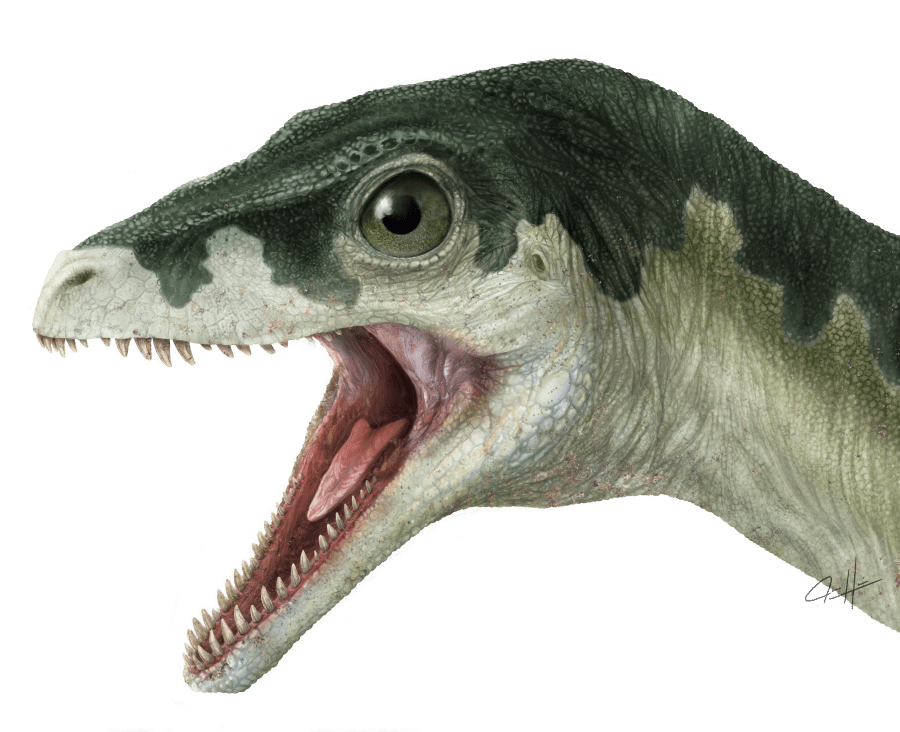
2021, digital – Eoraptor Headshot, Late Triassic, Argentina

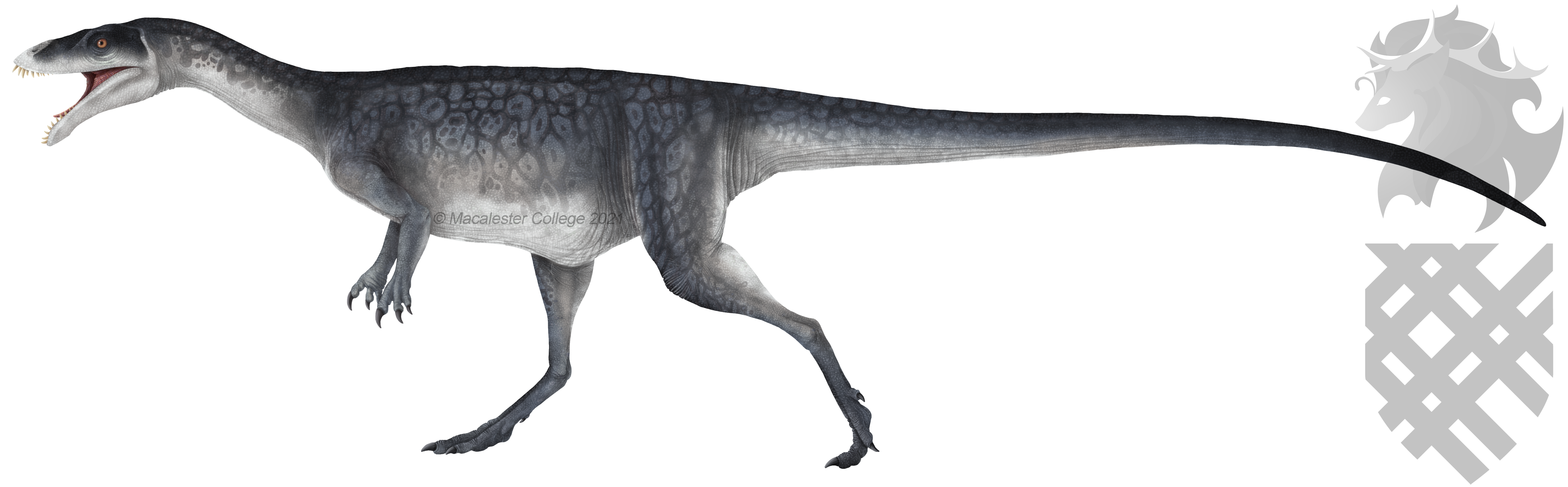
“Eoraptor lunensis is one of the oldest dinosaurs ever discovered.  It illustrates the basic anatomy of these earliest “fearfully great reptiles,” which actually started out as small, bipedal, (mostly) carnivorous animals.  You could hold the skull of Eoraptor in one hand, and as an adult it would have stood only knee-high.

Ray Rogers

© Macalester College 2021

This illustration is one of many works resulting from a multi-year collaboration with geologist Raymond Rogers and paleobiologist Kristina Curry Rogers. The series, titled Raising the Dead: Bringing Fossil Ecosystems to Life, aimed to envision ancient environments and long-extinct species with digitally drawn “prehistoric polaroids”.

Kristi, Ray, and Jordan worked through an iterative process to bring these fossil worlds to life.  They began with the hard science of published papers and ongoing research, choosing the animals and plants to feature in vignettes, small scenes that capture messages about the lives of the various animals.  Once the anatomical details for an animal were in place in a sketch, the group would play with color and skin texture to settle on a ‘look’ – occasionally for juveniles, males, and females, and occasionally for just a single individual, often drawing inspiration from living relatives.  Then the scene would come to life, as they considered the time of day, weather, and moment through each season season.  The scientific literature along with recent discoveries by Ray and Kristi provided details on vegetation, and on interactions between animals in different scenes. 

Dive into these fossil worlds, and use your imaginations to continue to bring them to life for yourselves.  What would it have sounded like?  What would the water temperature have been?  What might it have smelled like? These are the unknowns that infuse the pieces with even more life, and more individuality. 

Trionyx & Daspletosaurus

2021, digital – Trionyx & Daspletosaurus, Late Cretaceous, Montana, © Macalester College

“Trionyx, a soft-shelled aquatic turtle, and Daspletosaurus, a large-bodied carnivorous dinosaur, shared the Judith River ecosystem with a diversity of other plants and animals. 

Ray Rogers

© Macalester College 2021

This illustration is one of many works resulting from a multi-year collaboration with geologist Raymond Rogers and paleobiologist Kristina Curry Rogers. The series, titled Raising the Dead: Bringing Fossil Ecosystems to Life, aimed to envision ancient environments and long-extinct species with digitally drawn “prehistoric polaroids”.

Kristi, Ray, and Jordan worked through an iterative process to bring these fossil worlds to life.  They began with the hard science of published papers and ongoing research, choosing the animals and plants to feature in vignettes, small scenes that capture messages about the lives of the various animals.  Once the anatomical details for an animal were in place in a sketch, the group would play with color and skin texture to settle on a ‘look’ – occasionally for juveniles, males, and females, and occasionally for just a single individual, often drawing inspiration from living relatives.  Then the scene would come to life, as they considered the time of day, weather, and moment through each season season.  The scientific literature along with recent discoveries by Ray and Kristi provided details on vegetation, and on interactions between animals in different scenes. 

Dive into these fossil worlds, and use your imaginations to continue to bring them to life for yourselves.  What would it have sounded like?  What would the water temperature have been?  What might it have smelled like? These are the unknowns that infuse the pieces with even more life, and more individuality. 

Basilemys & Troodon

2021, digital – Basilemys & Troodon, Late Cretaceous, Montana

“Basilemys was one of the largest terrestrial tortoises around back in the Cretaceous. In the background, a feathered theropod called Troodon is on the hunt for a meal. Vegetation, including maple trees, would have looked similar in the Cretaceous to today’s southern North American forests.

Ray Rogers

© Macalester College 2021

This illustration is one of many works resulting from a multi-year collaboration with geologist Raymond Rogers and paleobiologist Kristina Curry Rogers. The series, titled Raising the Dead: Bringing Fossil Ecosystems to Life, aimed to envision ancient environments and long-extinct species with digitally drawn “prehistoric polaroids”.

Kristi, Ray, and Jordan worked through an iterative process to bring these fossil worlds to life.  They began with the hard science of published papers and ongoing research, choosing the animals and plants to feature in vignettes, small scenes that capture messages about the lives of the various animals.  Once the anatomical details for an animal were in place in a sketch, the group would play with color and skin texture to settle on a ‘look’ – occasionally for juveniles, males, and females, and occasionally for just a single individual, often drawing inspiration from living relatives.  Then the scene would come to life, as they considered the time of day, weather, and moment through each season season.  The scientific literature along with recent discoveries by Ray and Kristi provided details on vegetation, and on interactions between animals in different scenes. 

Dive into these fossil worlds, and use your imaginations to continue to bring them to life for yourselves.  What would it have sounded like?  What would the water temperature have been?  What might it have smelled like? These are the unknowns that infuse the pieces with even more life, and more individuality. 

Champsosaur

2021, digital – Champsosaurus, Late Cretaceous, Montana, © Macalester College

Champsosaurs like this were crocodile-like ambush predators, with long snouts filled with tiny, sharp, conical teeth.  Their vertebrae are common finds in the Judith River Formation.

Ray Rogers

© Macalester College 2021

This illustration was inspired by Keith Ladzinski’s Photograph in National Geographic.

This illustration is one of many works resulting from a multi-year collaboration with geologist Raymond Rogers and paleobiologist Kristina Curry Rogers. The series, titled Raising the Dead: Bringing Fossil Ecosystems to Life, aimed to envision ancient environments and long-extinct species with digitally drawn “prehistoric polaroids”.

Kristi, Ray, and Jordan worked through an iterative process to bring these fossil worlds to life.  They began with the hard science of published papers and ongoing research, choosing the animals and plants to feature in vignettes, small scenes that capture messages about the lives of the various animals.  Once the anatomical details for an animal were in place in a sketch, the group would play with color and skin texture to settle on a ‘look’ – occasionally for juveniles, males, and females, and occasionally for just a single individual, often drawing inspiration from living relatives.  Then the scene would come to life, as they considered the time of day, weather, and moment through each season season.  The scientific literature along with recent discoveries by Ray and Kristi provided details on vegetation, and on interactions between animals in different scenes. 

Dive into these fossil worlds, and use your imaginations to continue to bring them to life for yourselves.  What would it have sounded like?  What would the water temperature have been?  What might it have smelled like? These are the unknowns that infuse the pieces with even more life, and more individuality. 

Cretaceous Lake at Dusk

2021, digital – Cretaceous Lake at Dusk, Late Cretaceous, Montana, © Macalester College

Night falls on a Cretaceous lake, teeming with life, big and small.  These near-shore lakes, ponds, rivers, and floodplains are preserved as sandstones and mudstones within the Judith River Formation.

Ray Rogers

© Macalester College 2021

This illustration is one of many works resulting from a multi-year collaboration with geologist Raymond Rogers and paleobiologist Kristina Curry Rogers. The series, titled Raising the Dead: Bringing Fossil Ecosystems to Life, aimed to envision ancient environments and long-extinct species with digitally drawn “prehistoric polaroids”.

Kristi, Ray, and Jordan worked through an iterative process to bring these fossil worlds to life.  They began with the hard science of published papers and ongoing research, choosing the animals and plants to feature in vignettes, small scenes that capture messages about the lives of the various animals.  Once the anatomical details for an animal were in place in a sketch, the group would play with color and skin texture to settle on a ‘look’ – occasionally for juveniles, males, and females, and occasionally for just a single individual, often drawing inspiration from living relatives.  Then the scene would come to life, as they considered the time of day, weather, and moment through each season season.  The scientific literature along with recent discoveries by Ray and Kristi provided details on vegetation, and on interactions between animals in different scenes. 

Dive into these fossil worlds, and use your imaginations to continue to bring them to life for yourselves.  What would it have sounded like?  What would the water temperature have been?  What might it have smelled like? These are the unknowns that infuse the pieces with even more life, and more individuality. 

Frog in Footprint

2021, digital – Frog in Footprint, Late Cretaceous, Montana, © Macalester College

An as yet undescribed species of Cretaceous frog finds itself in the middle of a three-toed dinosaur footprint. The tiniest clues, including the fragile bones of frogs, ‘gizzard stones’ of crayfish, and even the traces left behind by tiny flukes parasitizing clams, all found their way into the Judith River Formation fossil record.

Ray Rogers

© Macalester College 2021

This illustration is one of many works resulting from a multi-year collaboration with geologist Raymond Rogers and paleobiologist Kristina Curry Rogers. The series, titled Raising the Dead: Bringing Fossil Ecosystems to Life, aimed to envision ancient environments and long-extinct species with digitally drawn “prehistoric polaroids”.

Kristi, Ray, and Jordan worked through an iterative process to bring these fossil worlds to life.  They began with the hard science of published papers and ongoing research, choosing the animals and plants to feature in vignettes, small scenes that capture messages about the lives of the various animals.  Once the anatomical details for an animal were in place in a sketch, the group would play with color and skin texture to settle on a ‘look’ – occasionally for juveniles, males, and females, and occasionally for just a single individual, often drawing inspiration from living relatives.  Then the scene would come to life, as they considered the time of day, weather, and moment through each season season.  The scientific literature along with recent discoveries by Ray and Kristi provided details on vegetation, and on interactions between animals in different scenes. 

Dive into these fossil worlds, and use your imaginations to continue to bring them to life for yourselves.  What would it have sounded like?  What would the water temperature have been?  What might it have smelled like? These are the unknowns that infuse the pieces with even more life, and more individuality. 

Scapherpeton

2021, digital – Scapherpeton, Late Cretaceous, Montana, © Macalester College

Salamanders like Scapherpeton are well-represented in the Judith River Formation.  Their limb bones, vertebrae, and jaws are common discoveries in microfossil bonebeds.  Also in this image are a variety of clams and snails, which lived on the bottoms of these Cretaceous ponds and lakes.

Ray Rogers

© Macalester College 2021

This illustration is one of many works resulting from a multi-year collaboration with geologist Raymond Rogers and paleobiologist Kristina Curry Rogers. The series, titled Raising the Dead: Bringing Fossil Ecosystems to Life, aimed to envision ancient environments and long-extinct species with digitally drawn “prehistoric polaroids”.

Kristi, Ray, and Jordan worked through an iterative process to bring these fossil worlds to life.  They began with the hard science of published papers and ongoing research, choosing the animals and plants to feature in vignettes, small scenes that capture messages about the lives of the various animals.  Once the anatomical details for an animal were in place in a sketch, the group would play with color and skin texture to settle on a ‘look’ – occasionally for juveniles, males, and females, and occasionally for just a single individual, often drawing inspiration from living relatives.  Then the scene would come to life, as they considered the time of day, weather, and moment through each season season.  The scientific literature along with recent discoveries by Ray and Kristi provided details on vegetation, and on interactions between animals in different scenes. 

Dive into these fossil worlds, and use your imaginations to continue to bring them to life for yourselves.  What would it have sounded like?  What would the water temperature have been?  What might it have smelled like? These are the unknowns that infuse the pieces with even more life, and more individuality. 

Lepisosteus under Lilies

2021, digital – Lepisosteus under Lilies, Late Cretaceous, Montana, © Macalester College

The alligator gar, Lepisosteus, is still a part of freshwater ecosystems today.  Here Jordan drew inspiration from the photography of Franz Lanting, and put a fossil spin on his famous photo of lily pads in the Okavango Delta, Botswana. The Judith River Formation’s underwater world may have looked very similar.

Ray Rogers

© Macalester College 2021

This illustration was inspired by Franz Lanting’s Photography.

This illustration is one of many works resulting from a multi-year collaboration with geologist Raymond Rogers and paleobiologist Kristina Curry Rogers. The series, titled Raising the Dead: Bringing Fossil Ecosystems to Life, aimed to envision ancient environments and long-extinct species with digitally drawn “prehistoric polaroids”.

Kristi, Ray, and Jordan worked through an iterative process to bring these fossil worlds to life.  They began with the hard science of published papers and ongoing research, choosing the animals and plants to feature in vignettes, small scenes that capture messages about the lives of the various animals.  Once the anatomical details for an animal were in place in a sketch, the group would play with color and skin texture to settle on a ‘look’ – occasionally for juveniles, males, and females, and occasionally for just a single individual, often drawing inspiration from living relatives.  Then the scene would come to life, as they considered the time of day, weather, and moment through each season season.  The scientific literature along with recent discoveries by Ray and Kristi provided details on vegetation, and on interactions between animals in different scenes. 

Dive into these fossil worlds, and use your imaginations to continue to bring them to life for yourselves.  What would it have sounded like?  What would the water temperature have been?  What might it have smelled like? These are the unknowns that infuse the pieces with even more life, and more individuality. 

Chelydra & Brachylophosaurus

2021, digital – Snapping Turtle, Upper Cretaceous, Judith River

Chelydra, a snapping turtle, and Brachylophosaurus, a large-bodied herbivorous duck-billed dinosaur, both nested along the banks of Judith River Formation ponds and lakes.

Ray Rogers

© Macalester College 2021

This illustration was inspired by Michael’s Photography.

This illustration is one of many works resulting from a multi-year collaboration with geologist Raymond Rogers and paleobiologist Kristina Curry Rogers. The series, titled Raising the Dead: Bringing Fossil Ecosystems to Life, aimed to envision ancient environments and long-extinct species with digitally drawn “prehistoric polaroids”.

Kristi, Ray, and Jordan worked through an iterative process to bring these fossil worlds to life.  They began with the hard science of published papers and ongoing research, choosing the animals and plants to feature in vignettes, small scenes that capture messages about the lives of the various animals.  Once the anatomical details for an animal were in place in a sketch, the group would play with color and skin texture to settle on a ‘look’ – occasionally for juveniles, males, and females, and occasionally for just a single individual, often drawing inspiration from living relatives.  Then the scene would come to life, as they considered the time of day, weather, and moment through each season season.  The scientific literature along with recent discoveries by Ray and Kristi provided details on vegetation, and on interactions between animals in different scenes. 

Dive into these fossil worlds, and use your imaginations to continue to bring them to life for yourselves.  What would it have sounded like?  What would the water temperature have been?  What might it have smelled like? These are the unknowns that infuse the pieces with even more life, and more individuality. 
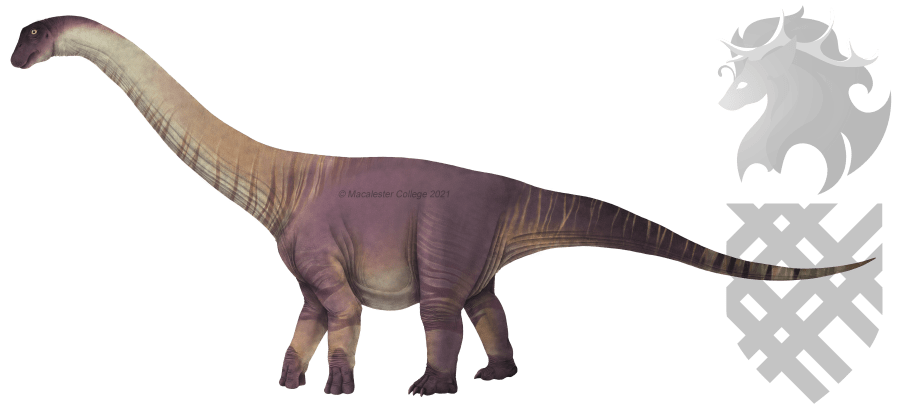
Maevaron Formation Macrofauna Studies

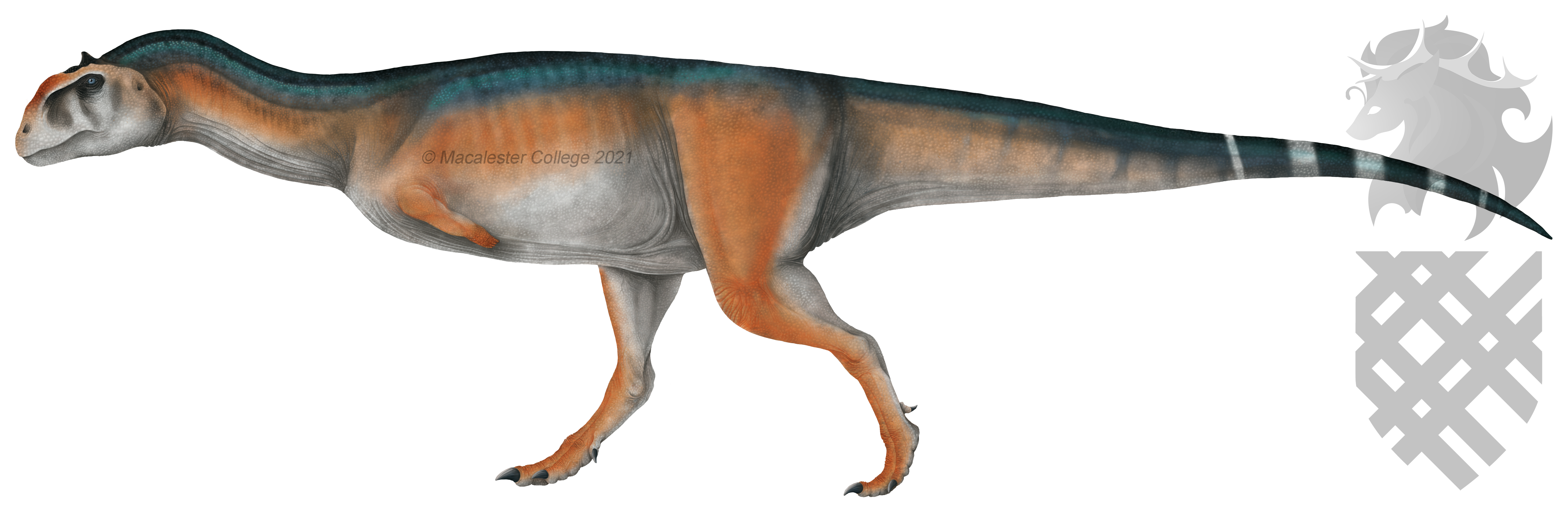
2021, digital – Vahiny Adult, Upper Cretaceous, Madagascar, © Macalester College
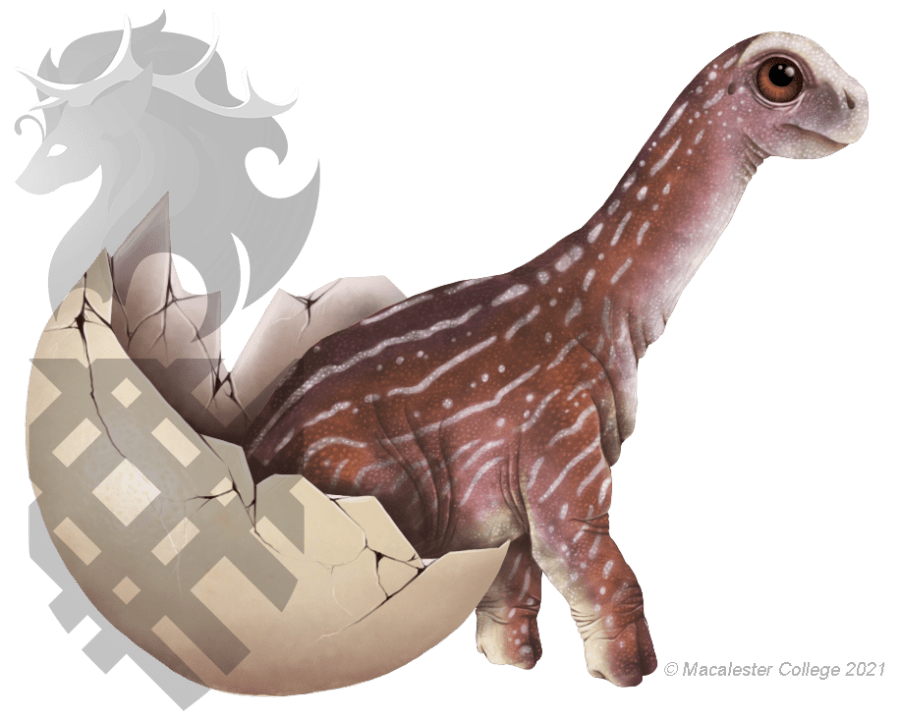
2021, digital – Rapetosaurus Hatchling, Upper Cretaceous, Madagascar, © Macalester College

© Macalester College 2021

These illustrations are some of many works resulting from a multi-year collaboration with geologist Raymond Rogers and paleobiologist Kristina Curry Rogers. The series, titled Raising the Dead: Bringing Fossil Ecosystems to Life, aimed to envision ancient environments and long-extinct species with digitally drawn “prehistoric polaroids”.

Kristi, Ray, and Jordan worked through an iterative process to bring these fossil worlds to life.  They began with the hard science of published papers and ongoing research, choosing the animals and plants to feature in vignettes, small scenes that capture messages about the lives of the various animals.  Once the anatomical details for an animal were in place in a sketch, the group would play with color and skin texture to settle on a ‘look’ – occasionally for juveniles, males, and females, and occasionally for just a single individual, often drawing inspiration from living relatives.  Then the scene would come to life, as they considered the time of day, weather, and moment through each season season.  The scientific literature along with recent discoveries by Ray and Kristi provided details on vegetation, and on interactions between animals in different scenes. 

Dive into these fossil worlds, and use your imaginations to continue to bring them to life for yourselves.  What would it have sounded like?  What would the water temperature have been?  What might it have smelled like? These are the unknowns that infuse the pieces with even more life, and more individuality.