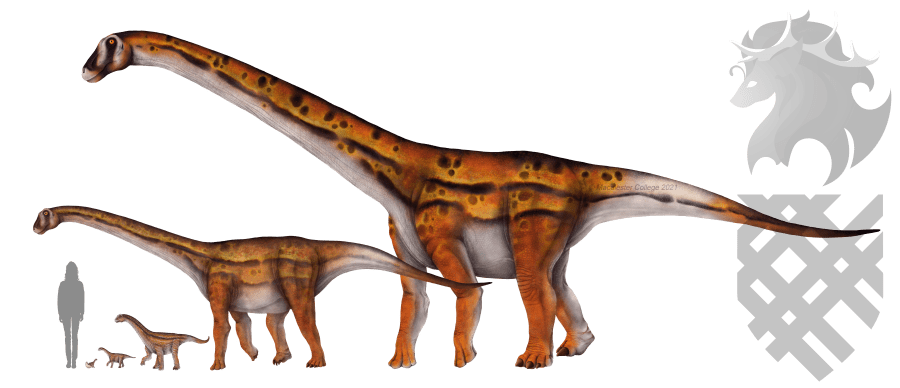
Rapetosaurus Anatomy Study

2021, digital – Rapetosaurus Ontogeny, Upper Cretaceous, Madagascar, © Macalester College
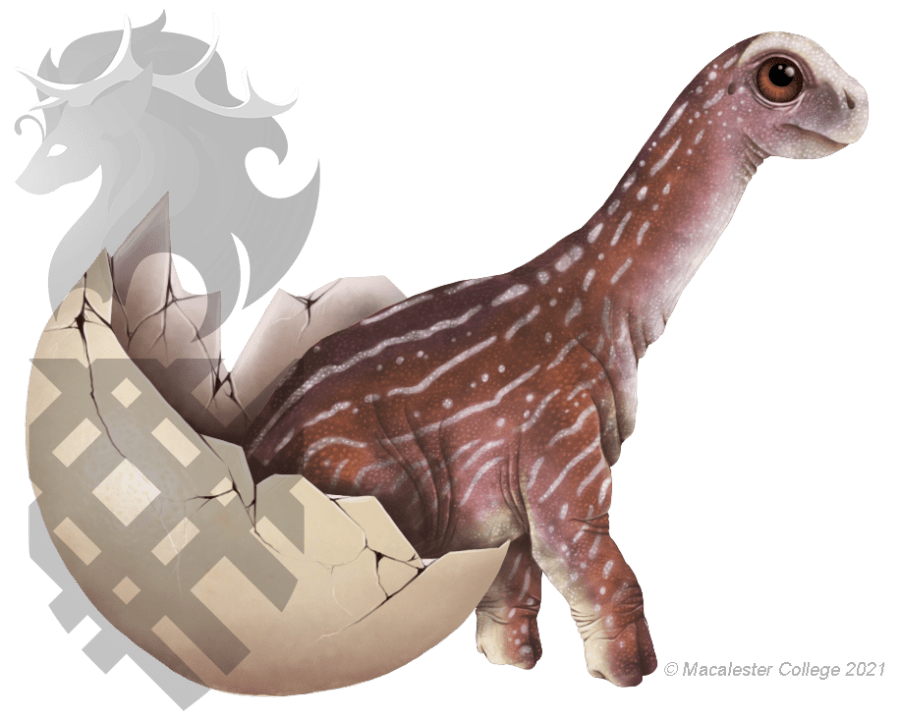
2021, digital – Rapetosaurus Hatchling, Upper Cretaceous, Madagascar, © Macalester College

These illustrations are some of many works resulting from a multi-year collaboration with geologist Raymond Rogers and paleobiologist Kristina Curry Rogers. The series, titled Raising the Dead: Bringing Fossil Ecosystems to Life, aimed to envision ancient environments and long-extinct species with digitally drawn “prehistoric polaroids”.

Kristi, Ray, and Jordan worked through an iterative process to bring these fossil worlds to life.  They began with the hard science of published papers and ongoing research, choosing the animals and plants to feature in vignettes, small scenes that capture messages about the lives of the various animals.  Once the anatomical details for an animal were in place in a sketch, the group would play with color and skin texture to settle on a ‘look’ – occasionally for juveniles, males, and females, and occasionally for just a single individual, often drawing inspiration from living relatives.  Then the scene would come to life, as they considered the time of day, weather, and moment through each season season.  The scientific literature along with recent discoveries by Ray and Kristi provided details on vegetation, and on interactions between animals in different scenes. 

Dive into these fossil worlds, and use your imaginations to continue to bring them to life for yourselves.  What would it have sounded like?  What would the water temperature have been?  What might it have smelled like? These are the unknowns that infuse the pieces with even more life, and more individuality. 

© Macalester College 2021

Rapetosaurus Foraging

2020, digital – Feeding Baby Rapetosaurus, Upper Cretaceous, Madagascar, © Macalester College

© Macalester College 2021

This illustration is one of many works resulting from a multi-year collaboration with geologist Raymond Rogers and paleobiologist Kristina Curry Rogers. The series, titled Raising the Dead: Bringing Fossil Ecosystems to Life, aimed to envision ancient environments and long-extinct species with digitally drawn “prehistoric polaroids”.

Kristi, Ray, and Jordan worked through an iterative process to bring these fossil worlds to life.  They began with the hard science of published papers and ongoing research, choosing the animals and plants to feature in vignettes, small scenes that capture messages about the lives of the various animals.  Once the anatomical details for an animal were in place in a sketch, the group would play with color and skin texture to settle on a ‘look’ – occasionally for juveniles, males, and females, and occasionally for just a single individual, often drawing inspiration from living relatives.  Then the scene would come to life, as they considered the time of day, weather, and moment through each season season.  The scientific literature along with recent discoveries by Ray and Kristi provided details on vegetation, and on interactions between animals in different scenes. 

Dive into these fossil worlds, and use your imaginations to continue to bring them to life for yourselves.  What would it have sounded like?  What would the water temperature have been?  What might it have smelled like? These are the unknowns that infuse the pieces with even more life, and more individuality.  

© Macalester College 2021
Juvenile Rapetosaurus were capable of far more varied patterns of locomotion than giant adults.  Anatomical data suggest that baby Rapetosaurus would have been capable of running, jumping, and even rearing up on their hindlimbs to grab low-hanging vegetation.”  

Kristina Curry Rogers

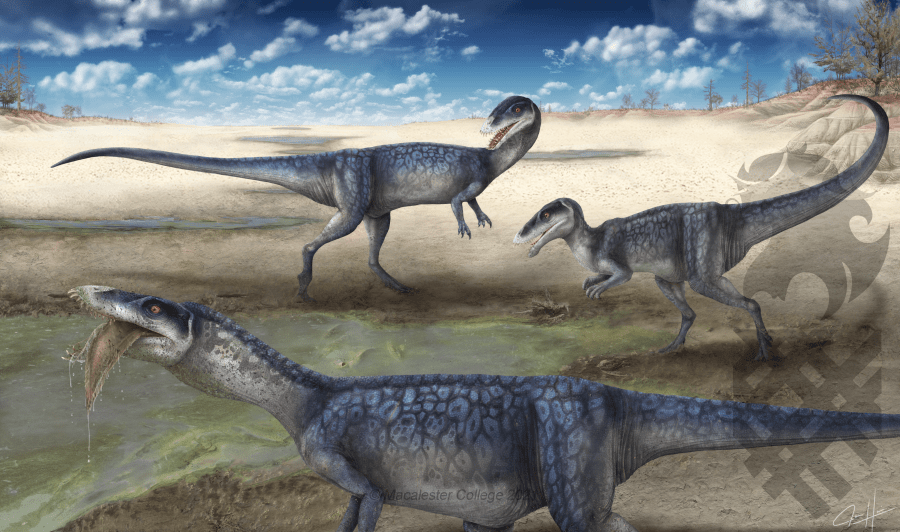
Masiakasaurus Triad 

2020, digital – Masiakasaurus Triad, Upper Cretaceous, Madagascar, © Macalester College

Masiaksaurus, with their strange, forward-pointing teeth, may have feasted on fish.  These prey would’ve been easier to snag as drought drove water from the system, and small pools became anoxic. Check out the dead birds, soon to become fossils, if only they are lucky enough to survive trampling.

Ray Rogers

© Macalester College 2021

This illustration is one of many works resulting from a multi-year collaboration with geologist Raymond Rogers and paleobiologist Kristina Curry Rogers. The series, titled Raising the Dead: Bringing Fossil Ecosystems to Life, aimed to envision ancient environments and long-extinct species with digitally drawn “prehistoric polaroids”.

Kristi, Ray, and Jordan worked through an iterative process to bring these fossil worlds to life.  They began with the hard science of published papers and ongoing research, choosing the animals and plants to feature in vignettes, small scenes that capture messages about the lives of the various animals.  Once the anatomical details for an animal were in place in a sketch, the group would play with color and skin texture to settle on a ‘look’ – occasionally for juveniles, males, and females, and occasionally for just a single individual, often drawing inspiration from living relatives.  Then the scene would come to life, as they considered the time of day, weather, and moment through each season season.  The scientific literature along with recent discoveries by Ray and Kristi provided details on vegetation, and on interactions between animals in different scenes. 

Dive into these fossil worlds, and use your imaginations to continue to bring them to life for yourselves.  What would it have sounded like?  What would the water temperature have been?  What might it have smelled like? These are the unknowns that infuse the pieces with even more life, and more individuality. 

Mahajangasuchus & Rahonavis 

2020, digital – Mahajangasuchus with Rahonavis, Upper Cretaceous, Madagascar, © Macalester College

Mahajangasuchus, a large crocodile, with Rahonavis, a small, feathered dinosaur.  Rahonavis exhibits anatomical traits of both dinosaurs and of birds (including feathers), and has been an important player in the realization that birds are derived from dinosaur ancestors.

Ray Rogers

© Macalester College 2021

This illustration is one of many works resulting from a multi-year collaboration with geologist Raymond Rogers and paleobiologist Kristina Curry Rogers. The series, titled Raising the Dead: Bringing Fossil Ecosystems to Life, aimed to envision ancient environments and long-extinct species with digitally drawn “prehistoric polaroids”.

Kristi, Ray, and Jordan worked through an iterative process to bring these fossil worlds to life.  They began with the hard science of published papers and ongoing research, choosing the animals and plants to feature in vignettes, small scenes that capture messages about the lives of the various animals.  Once the anatomical details for an animal were in place in a sketch, the group would play with color and skin texture to settle on a ‘look’ – occasionally for juveniles, males, and females, and occasionally for just a single individual, often drawing inspiration from living relatives.  Then the scene would come to life, as they considered the time of day, weather, and moment through each season season.  The scientific literature along with recent discoveries by Ray and Kristi provided details on vegetation, and on interactions between animals in different scenes. 

Dive into these fossil worlds, and use your imaginations to continue to bring them to life for yourselves.  What would it have sounded like?  What would the water temperature have been?  What might it have smelled like? These are the unknowns that infuse the pieces with even more life, and more individuality. 

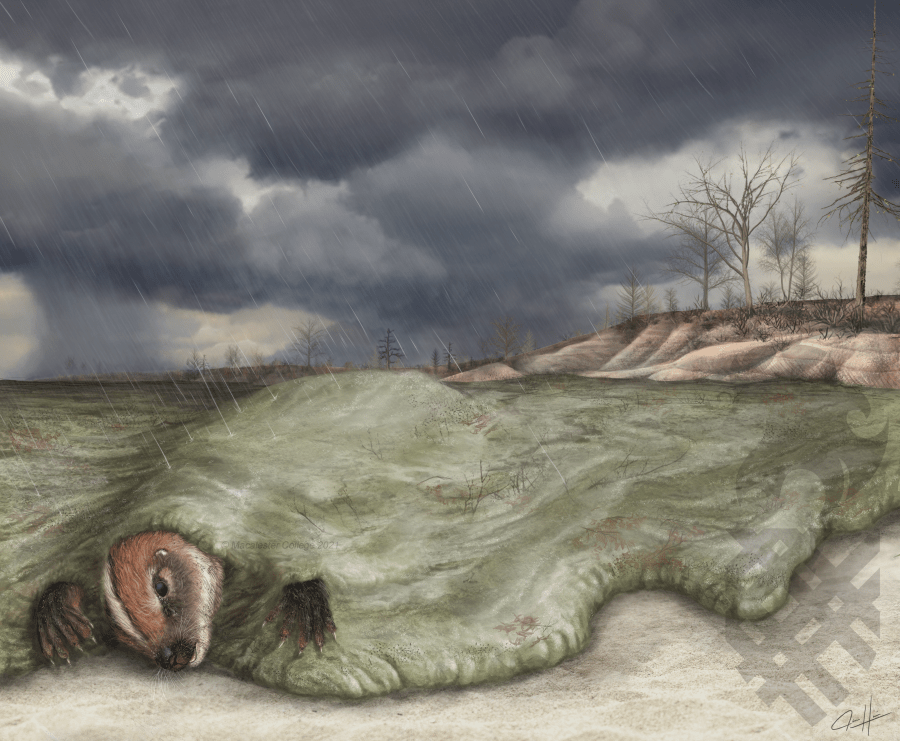
Adalatherium & Debris Flow 

2021, digital – Adalatherium in Seasonal Flood, Upper Cretaceous, Madagascar,  © Macalester College

“Adaltherium (“crazy beast”) is a mammal known for its specialized sensory anatomy and arms built for burrowing.  Here, Adalatherium can’t escape the milkshake-like debris flow barreling down the dry river bed, and is buried alive.

Ray Rogers

© Macalester College 2021

This illustration is one of many works resulting from a multi-year collaboration with geologist Raymond Rogers and paleobiologist Kristina Curry Rogers. The series, titled Raising the Dead: Bringing Fossil Ecosystems to Life, aimed to envision ancient environments and long-extinct species with digitally drawn “prehistoric polaroids”.

Kristi, Ray, and Jordan worked through an iterative process to bring these fossil worlds to life.  They began with the hard science of published papers and ongoing research, choosing the animals and plants to feature in vignettes, small scenes that capture messages about the lives of the various animals.  Once the anatomical details for an animal were in place in a sketch, the group would play with color and skin texture to settle on a ‘look’ – occasionally for juveniles, males, and females, and occasionally for just a single individual, often drawing inspiration from living relatives.  Then the scene would come to life, as they considered the time of day, weather, and moment through each season season.  The scientific literature along with recent discoveries by Ray and Kristi provided details on vegetation, and on interactions between animals in different scenes. 

Dive into these fossil worlds, and use your imaginations to continue to bring them to life for yourselves.  What would it have sounded like?  What would the water temperature have been?  What might it have smelled like? These are the unknowns that infuse the pieces with even more life, and more individuality. 

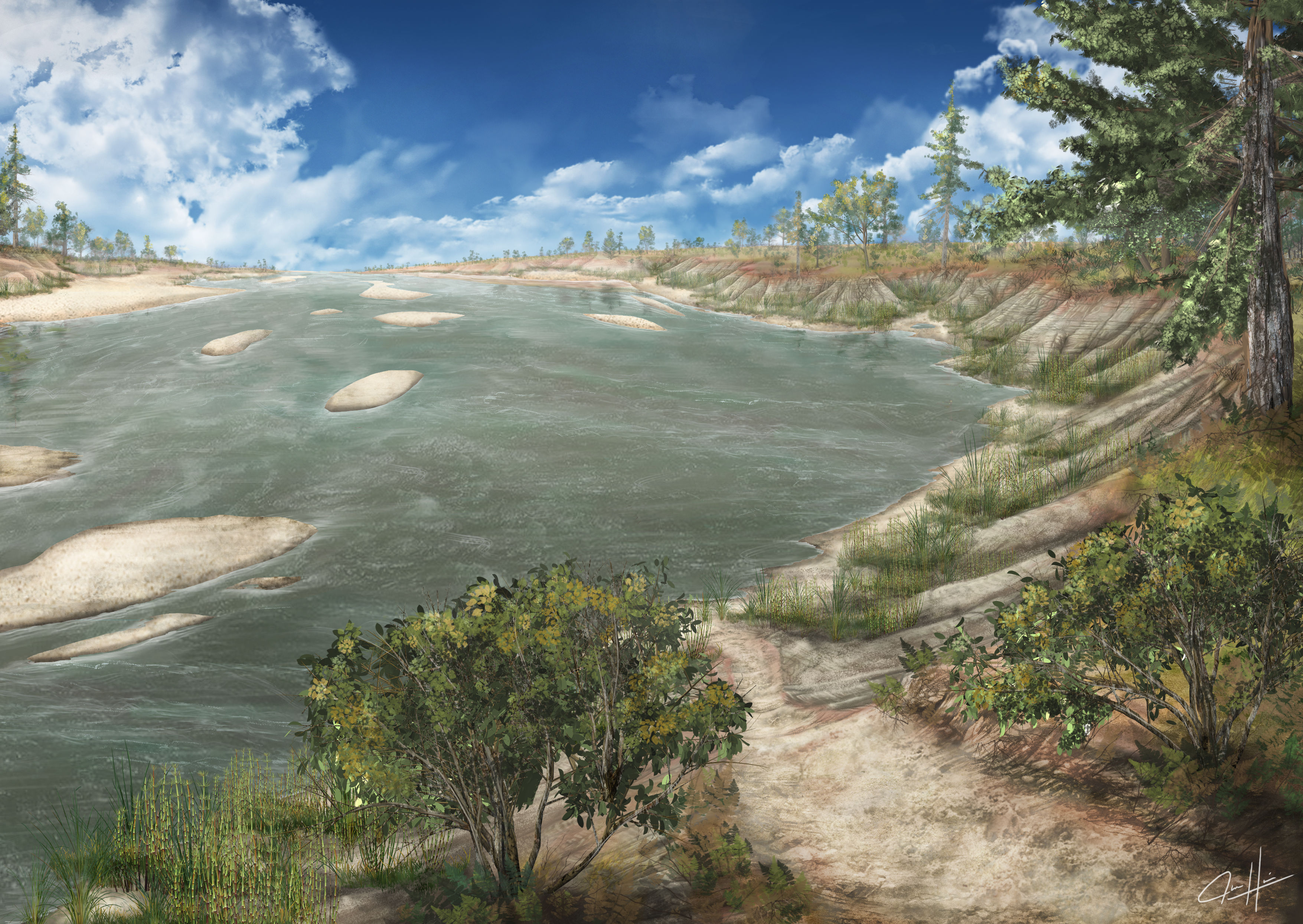
Monsoon Season in the Mahajanga Basin

When rain returned to the basin, the sediment carried into the dry riverbeds buried the dead, and resulted in  the formation of a remarkable fossil record.

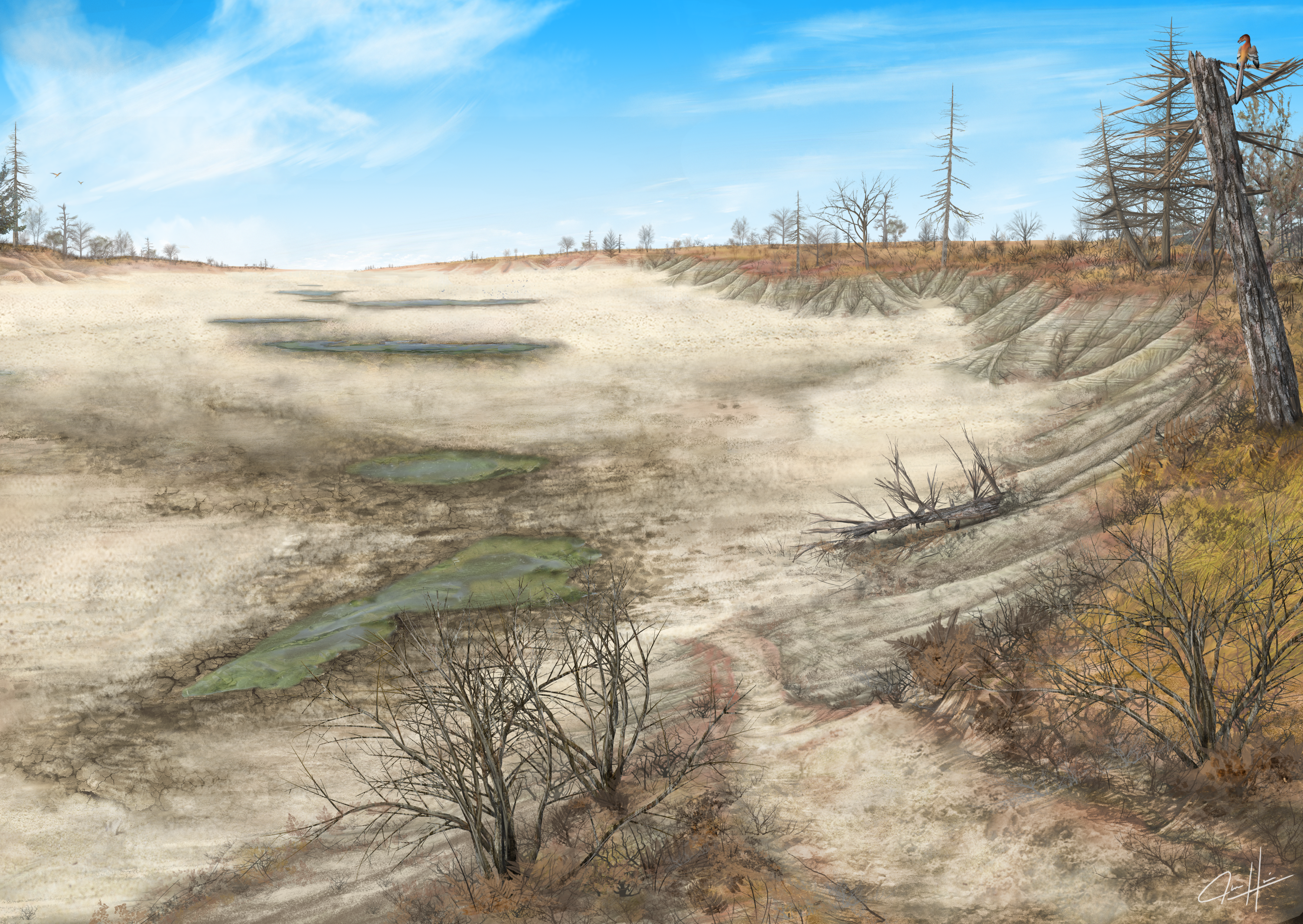
Drought Comes to the Mahajanga Basin

As drought set in, animals concentrated around dwindling water supplies.  Many succumbed to malnutrition and disease, and eventually gained immortality in the fossil record.

To the Table

2021, digital – To the Table, Upper Cretaceous, Madagascar, © Macalester College

Just as in modern-day sub-Saharan Africa, a large carcass on the ground becomes an ecosystem all its own.  Here we see Majungasaurus and Rahonavis, two theropod dinosaurs, gathering to feast on the dead.

Ray Rogers

© Macalester College 2021

This illustration is one of many works resulting from a multi-year collaboration with geologist Raymond Rogers and paleobiologist Kristina Curry Rogers. The series, titled Raising the Dead: Bringing Fossil Ecosystems to Life, aimed to envision ancient environments and long-extinct species with digitally drawn “prehistoric polaroids”.

Kristi, Ray, and Jordan worked through an iterative process to bring these fossil worlds to life.  They began with the hard science of published papers and ongoing research, choosing the animals and plants to feature in vignettes, small scenes that capture messages about the lives of the various animals.  Once the anatomical details for an animal were in place in a sketch, the group would play with color and skin texture to settle on a ‘look’ – occasionally for juveniles, males, and females, and occasionally for just a single individual, often drawing inspiration from living relatives.  Then the scene would come to life, as they considered the time of day, weather, and moment through each season season.  The scientific literature along with recent discoveries by Ray and Kristi provided details on vegetation, and on interactions between animals in different scenes. 

Dive into these fossil worlds, and use your imaginations to continue to bring them to life for yourselves.  What would it have sounded like?  What would the water temperature have been?  What might it have smelled like? These are the unknowns that infuse the pieces with even more life, and more individuality. 

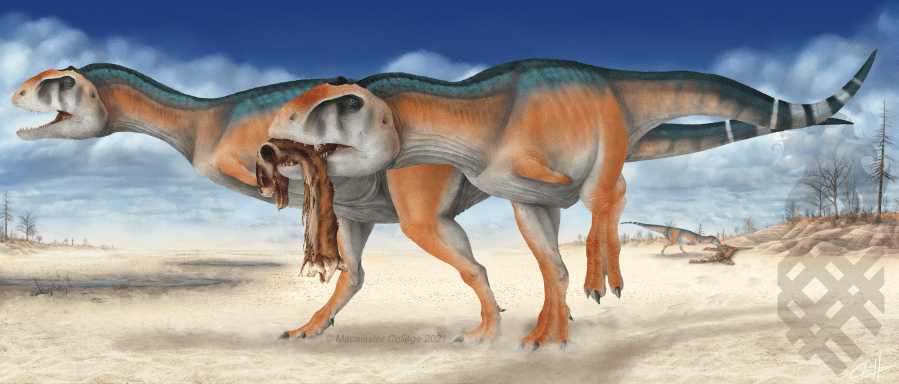
Dining on the Dead

2020, digital – Scavenging Majungasaurus Duo, Upper Cretaceous, Madagascar, © Macalester College

Three adult, carnivorous Majungasaurus feed on the carcass of the herbivorous Rapetosaurus.  Tooth marks abound on the bones of animals in the Maevarano Formation, and indicate that scavenging was an important part of organics recycling in this ecosystem. 

Ray Rogers

© Macalester College 2021

This illustration is one of many works resulting from a multi-year collaboration with geologist Raymond Rogers and paleobiologist Kristina Curry Rogers. The series, titled Raising the Dead: Bringing Fossil Ecosystems to Life, aimed to envision ancient environments and long-extinct species with digitally drawn “prehistoric polaroids”.

Kristi, Ray, and Jordan worked through an iterative process to bring these fossil worlds to life.  They began with the hard science of published papers and ongoing research, choosing the animals and plants to feature in vignettes, small scenes that capture messages about the lives of the various animals.  Once the anatomical details for an animal were in place in a sketch, the group would play with color and skin texture to settle on a ‘look’ – occasionally for juveniles, males, and females, and occasionally for just a single individual, often drawing inspiration from living relatives.  Then the scene would come to life, as they considered the time of day, weather, and moment through each season season.  The scientific literature along with recent discoveries by Ray and Kristi provided details on vegetation, and on interactions between animals in different scenes. 

Dive into these fossil worlds, and use your imaginations to continue to bring them to life for yourselves.  What would it have sounded like?  What would the water temperature have been?  What might it have smelled like? These are the unknowns that infuse the pieces with even more life, and more individuality. 

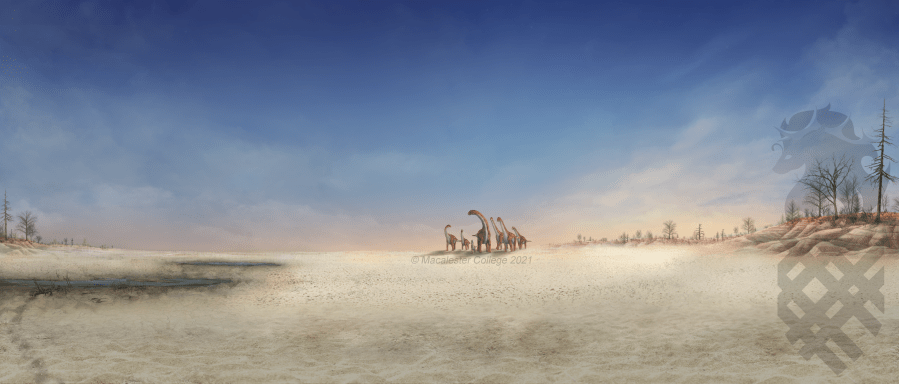
Herd on the Horizon

2020, digital – Rapetosaurus Herd, Upper Cretaceous, Madagascar, © Macalester College

A herd of the giant plant-eating sauropod dinosaur, Rapetosaurus krausei, come into view.  The Maevarano Formation preserves one of the best records of sauropod dinosaurs anywhere on earth, from hatching to adulthood.  

Kristina Curry Rogers

© Macalester College 2021

This illustration is one of many works resulting from a multi-year collaboration with geologist Raymond Rogers and paleobiologist Kristina Curry Rogers. The series, titled Raising the Dead: Bringing Fossil Ecosystems to Life, aimed to envision ancient environments and long-extinct species with digitally drawn “prehistoric polaroids”.

Kristi, Ray, and Jordan worked through an iterative process to bring these fossil worlds to life.  They began with the hard science of published papers and ongoing research, choosing the animals and plants to feature in vignettes, small scenes that capture messages about the lives of the various animals.  Once the anatomical details for an animal were in place in a sketch, the group would play with color and skin texture to settle on a ‘look’ – occasionally for juveniles, males, and females, and occasionally for just a single individual, often drawing inspiration from living relatives.  Then the scene would come to life, as they considered the time of day, weather, and moment through each season season.  The scientific literature along with recent discoveries by Ray and Kristi provided details on vegetation, and on interactions between animals in different scenes. 

Dive into these fossil worlds, and use your imaginations to continue to bring them to life for yourselves.  What would it have sounded like?  What would the water temperature have been?  What might it have smelled like? These are the unknowns that infuse the pieces with even more life, and more individuality. 

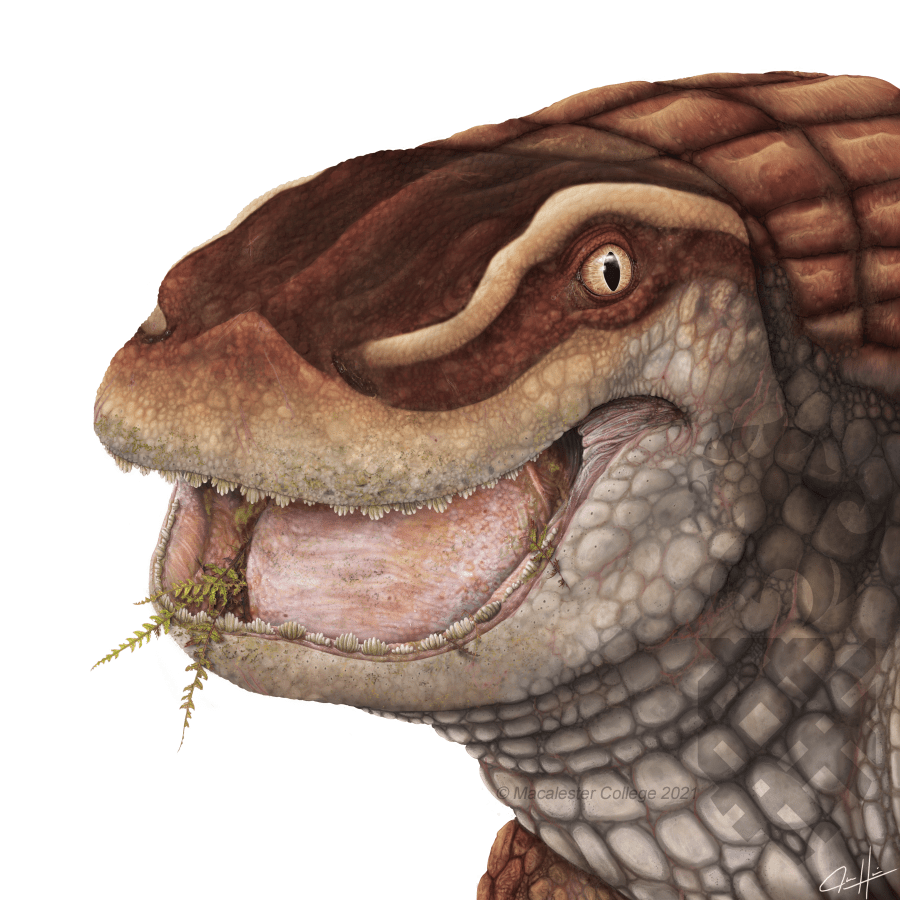
Simosuchus

2020, digital – Simosuchus Headshot, Upper Cretaceous, Madagascar, © Macalester College

This illustration is one of many works resulting from a multi-year collaboration with geologist Raymond Rogers and paleobiologist Kristina Curry Rogers. The series, titled Raising the Dead: Bringing Fossil Ecosystems to Life, aimed to envision ancient environments and long-extinct species with digitally drawn “prehistoric polaroids”.

Kristi, Ray, and Jordan worked through an iterative process to bring these fossil worlds to life.  They began with the hard science of published papers and ongoing research, choosing the animals and plants to feature in vignettes, small scenes that capture messages about the lives of the various animals.  Once the anatomical details for an animal were in place in a sketch, the group would play with color and skin texture to settle on a ‘look’ – occasionally for juveniles, males, and females, and occasionally for just a single individual, often drawing inspiration from living relatives.  Then the scene would come to life, as they considered the time of day, weather, and moment through each season season.  The scientific literature along with recent discoveries by Ray and Kristi provided details on vegetation, and on interactions between animals in different scenes. 

Dive into these fossil worlds, and use your imaginations to continue to bring them to life for yourselves.  What would it have sounded like?  What would the water temperature have been?  What might it have smelled like? These are the unknowns that infuse the pieces with even more life, and more individuality. 

© Macalester College 2021 

“Simosuchus clarki, a strange, small bodied crocodile, known for its “pug-nose” snout, and “mitten-shaped” teeth.  This unusual combination of anatomical features points to a plant-based diet.  Imagine that – a vegetarian crocodile!

Ray Rogers

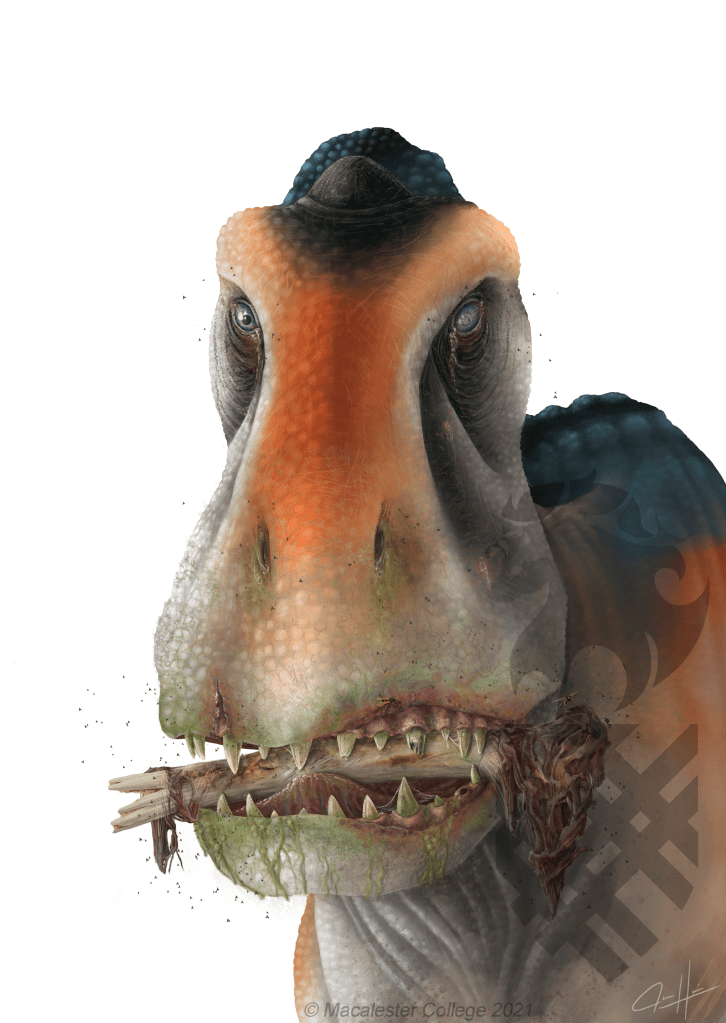
Majungasaurus

2020, digital – Haggard Majungasaurus Headshot, Upper Cretaceous, Madagascar, © Macalester College

This illustration is one of many works resulting from a multi-year collaboration with geologist Raymond Rogers and paleobiologist Kristina Curry Rogers. The series, titled Raising the Dead: Bringing Fossil Ecosystems to Life, aimed to envision ancient environments and long-extinct species with digitally drawn “prehistoric polaroids”.

Kristi, Ray, and Jordan worked through an iterative process to bring these fossil worlds to life.  They began with the hard science of published papers and ongoing research, choosing the animals and plants to feature in vignettes, small scenes that capture messages about the lives of the various animals.  Once the anatomical details for an animal were in place in a sketch, the group would play with color and skin texture to settle on a ‘look’ – occasionally for juveniles, males, and females, and occasionally for just a single individual, often drawing inspiration from living relatives.  Then the scene would come to life, as they considered the time of day, weather, and moment through each season season.  The scientific literature along with recent discoveries by Ray and Kristi provided details on vegetation, and on interactions between animals in different scenes. 

Dive into these fossil worlds, and use your imaginations to continue to bring them to life for yourselves.  What would it have sounded like?  What would the water temperature have been?  What might it have smelled like? These are the unknowns that infuse the pieces with even more life, and more individuality.  

© Macalester College 2021
“Majungasaurus crenatissimus is a meat-eating theropod dinosaur.  Majungasaurus is captured here at the end of a punishing drought, in which it resorted to cannibalizing carcasses of its own species to stay alive.”  

Ray Rogers